
Goodwood Betting: Odds, Tips and Data-Driven Strategy for Glorious Goodwood
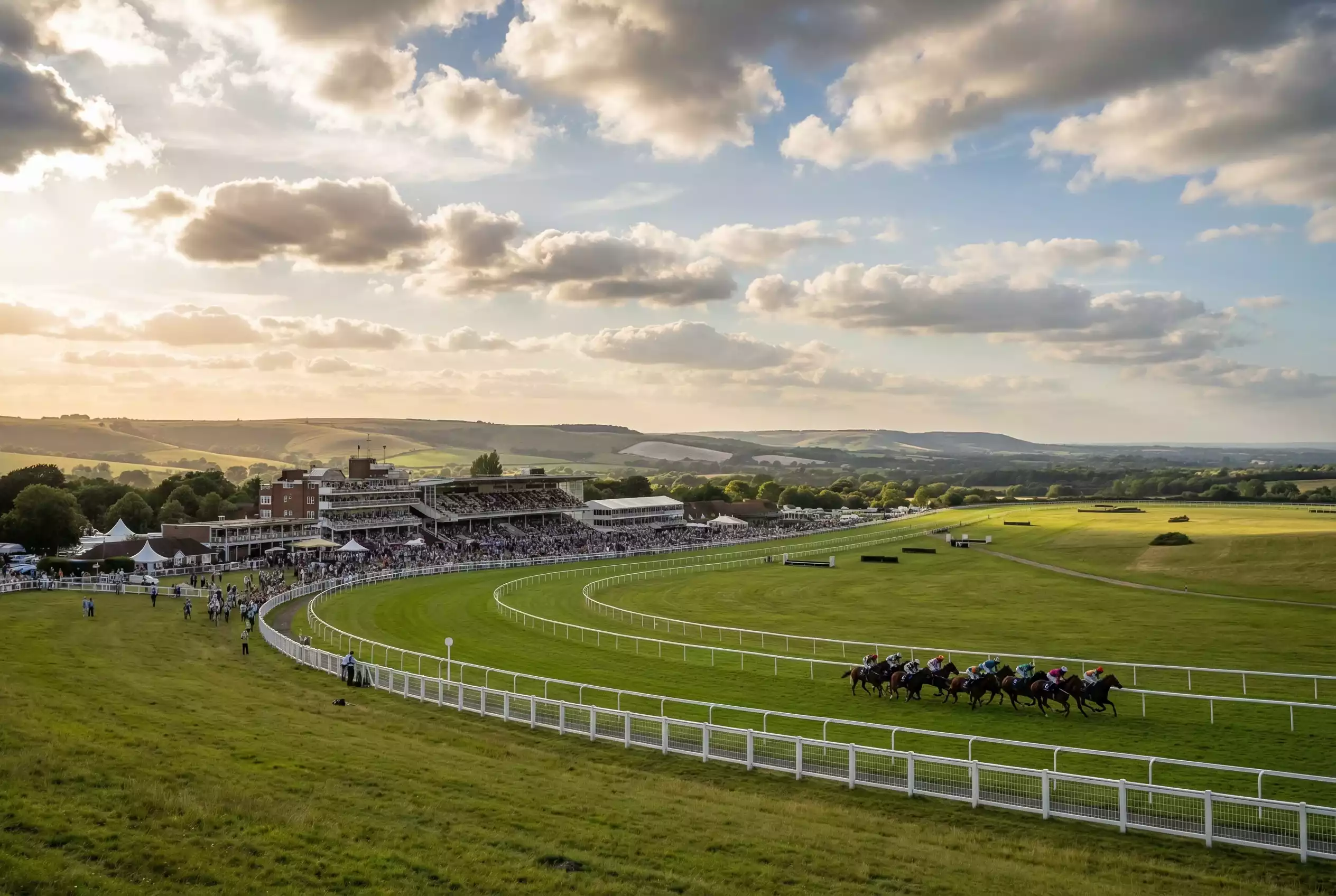
Goodwood betting demands a different kind of homework. Perched on the Sussex Downs above Chichester, this racecourse has been hosting competitive flat racing since 1802 — more than 220 years of hooves pounding chalk downland turf — and its quirks still catch punters off guard every summer. The undulating track, with its pronounced right-hand camber and sharp gradients, rewards inside-rail positions in sprints yet flattens the draw advantage once the straight mile comes into play. Add a cashless venue policy that bans notes and coins from all official betting points, and you have a meeting where preparation separates profit from frustration.
None of this happens in a vacuum. British horse racing attracted 5.031 million spectators in 2025, surpassing the five-million mark for the first time since 2019, and total prize money across UK fixtures hit a record £194.7 million in the same year. The betting side of the sport generates substantial revenue too: according to the Gambling Commission's annual industry report, gross gambling yield from remote horse racing wagers reached £766.7 million in the twelve months to March 2025. As the British Horseracing Authority stated in its submission to Parliament, "the racing industry has direct revenues in excess of £1.47 billion and makes a total annual contribution to the UK economy of £4.1 billion" — BHA, British Horseracing Authority.
Glorious Goodwood sits near the peak of this calendar. Held across five days in late July and early August, the Qatar Goodwood Festival stages 37 races — three of them at Group 1 level — attracting runners from Europe's leading stables and jockeys who have mapped every camber and false rail on the course. The festival is not merely a glamorous social occasion, though it manages that too. It is a concentrated test of form analysis, ground awareness, and positional strategy that rewards the bettor willing to dig into stall data, trainer profit lines, and going reports rather than relying on the front page of the Racing Post.
This guide is built on that principle: data-driven picks for every Goodwood race. Over the sections that follow, you will find a breakdown of the festival's structure and key races, an explanation of how betting works at a cashless venue, a primer on draw bias with real five-year Level Stakes Profit figures, trainer and jockey rankings by profitability rather than raw win counts, a guide to reading going conditions on Goodwood's distinctive chalk turf, and a framework for managing your bankroll across the full five-day meeting. Where deeper dives exist — draw heatmaps, Stewards' Cup trend filters, pace-interaction models — the relevant cluster articles are linked so you can drill into the numbers at your own pace.
Whether you are a seasoned punter looking for an analytical edge or attending your first day at Goodwood and wondering why the person next to you keeps muttering about stall two, this is where you start.
The Numbers That Should Shape Your Goodwood Bets
- Draw bias is decisive in sprints: stall one at five furlongs wins at double the rate of any other position, and stall seven at six furlongs has lost punters over 72 points at level stakes across five years.
- The most-winning trainer at Goodwood, Andrew Balding, actually loses money at level stakes — Ralph Beckett's 28 winners have returned an LSP of +117.31, making him the profitable follow.
- Going conditions reset the equation: firm ground amplifies draw advantages while soft ground compresses the field, so check the GoingStick readings before committing to any sprint selection.
- Budget for five days, not five races — set a fixed bankroll, divide it daily, and treat sitting out a race as a legitimate strategic move.
- Goodwood is a cashless venue with no ATMs, so bring a debit card or plan to use your mobile betting app on course.
The Qatar Goodwood Festival: Five Days, 37 Races, Three Group 1 Prizes
The Qatar Goodwood Festival runs across five consecutive days — Tuesday to Saturday — in late July and early August, making it one of the longest continuous flat racing meetings in the British calendar. In 2025, the festival staged 37 races over those five days, 16 of which were Group contests, with three carrying Group 1 status. That density of high-class racing, compressed into fewer than a week, creates a unique challenge for punters: the form book evolves in real time as ground conditions shift, track biases reveal themselves, and in-form trainers and jockeys build momentum from day to day.
The festival's title sponsorship tells its own story. Visit Qatar took over from the Qatar Racing and Equestrian Club in 2025, continuing what amounts to the largest sponsorship deal in the history of British horse racing — worth roughly £2 million per year across an initial ten-year contract that began in 2015 and was recently renewed as a multi-year partnership. That investment has driven prize money upward across the card. The three Group 1 contests alone distribute more than £2.1 million: the Sussex Stakes carries a £1 million purse, the Nassau Stakes offers £600,000, and the Goodwood Cup adds another £500,000. The Duke of Richmond, Goodwood's chairman, acknowledged the significance of this backing when the renewed partnership was announced: "I would like to take this opportunity to thank Qatar Racing and Equestrian Club for their enormous contribution to the Qatar Goodwood Festival and to British Horseracing" — Duke of Richmond, Chairman, Goodwood Racecourse.
For punters, the calendar structure matters. Tuesday opens with a mix of Group and handicap races designed to set the tone — the Goodwood Cup anchors the day, offering stayers their biggest summer target. Wednesday belongs to the Sussex Stakes, the first all-aged Group 1 mile race of the European season and a contest that routinely attracts champions from Newmarket, Ballydoyle, and the French yards. Thursday's centrepiece is the Nassau Stakes, a fillies' and mares' Group 1 over ten furlongs that often serves as a stepping stone toward autumn targets like the Prix de l'Arc de Triomphe or the Champion Stakes. Friday shifts gear toward speed with the King George Stakes, a Group 2 sprint over five furlongs, while Saturday closes the meeting with the Stewards' Cup — a heritage 6-furlong handicap that packs up to 28 runners across the track and represents one of the most chaotic, data-rich betting puzzles in flat racing.
Beyond the headline races, each day features supporting contests that offer their own betting opportunities: nursery handicaps for two-year-olds, conditions stakes for improvers, and maiden races where future stars occasionally announce themselves at generous prices. The 2026 festival is scheduled to maintain this five-day structure, and early indications from entries suggest competitive fields across every card, with average field sizes on Premier Flat fixtures trending upward to 11.02 runners in 2025 compared with 10.86 the year before.
Positioning Goodwood within the broader flat season helps explain its tactical significance. The festival arrives after Royal Ascot in June and the July meeting at Newmarket, meaning most leading horses have established form lines. Trainers have had time to identify course preferences — some horses thrive on Goodwood's undulations while others never handle the camber — and the going, which can fluctuate dramatically during a British summer, introduces a variable that reshapes the draw bias picture from day to day. Punters who treat the festival as a five-race sprint rather than a five-day marathon tend to come unstuck. Bankroll management, selective betting, and the willingness to sit out races where data offers no edge are as important as picking the right horse in the Sussex Stakes.
The Magnolia Cup, a charity flat race typically run on Thursday, raised a record £834,170 for the King's Trust International in 2025, demonstrating the festival's reach beyond prize money and punting. For the purposes of this guide, however, the focus remains on the competitive races where form, data, and strategy intersect to create genuine betting value.
Interactive Tool
Field Size Growth, and Qatar Sponsorship Total Value
Calculate the exact year-on-year rise in average field size, and the total value of the Qatar Goodwood Festival's sponsorship contract.
Percentage Growth
-
-
2024 Average
-
2025 Average
-
Absolute Increase
-
What this guide gives as two figures without the growth rate: "average field sizes on Premier Flat fixtures trending upward to 11.02 runners in 2025 compared with 10.86 the year before." The percentage growth is never calculated — it's +1.47%, an increase of 0.16 runners per race.
Total Contract Value
-
-
Annual Value
-
Contract Length
-
vs Group 1 Purses
-
What this guide gives as an annual figure and a duration without the total: "the largest sponsorship deal in the history of British horse racing — worth roughly £2 million per year across an initial ten-year contract that began in 2015." The total contract value is never calculated — it's £20 million, roughly 9.5x the combined purses of the festival's three Group 1 races.
Key Races at a Glance
Sussex Stakes
The Sussex Stakes is a Group 1 contest run over one mile on Wednesday — the marquee event of the entire festival. With a prize fund of £1,000,000 in 2025, awarding £567,100 to the winner, it attracts the best milers in European training. The race has a history of producing shock results: Qirat's victory in 2025 at odds of 150/1 stands as the biggest upset in Group 1 history across both Britain and Ireland. Sir Gordon Richards holds the jockey record with eight wins between 1928 and 1952, while Sir Henry Cecil leads the trainers' table with seven. Ed Arkell, Goodwood's Director of Racing, has highlighted the consistent quality and depth of entries for the Sussex Stakes, calling it a race that delivers competitive fields year after year as the first all-aged Group 1 mile contest in Europe. For bettors, the lesson is clear: class is essential, but this race punishes blind favouritism — and draw position at the mile distance matters more than most punters assume.
Goodwood Cup
The Goodwood Cup is a Group 1 staying contest over two miles, run on Tuesday as the festival opener. The 2025 prize fund stood at £500,000, making it the richest staying flat race of the British summer. Aidan O'Brien has dominated this event over the past two decades with five victories — Yeats in 2006 and 2008, Kyprios in 2022 and 2024, and Scandinavia in 2025 — establishing Ballydoyle as the default starting point for any form analysis. The legendary Stradivarius remains the only horse to win the race four consecutive times, from 2017 to 2020, a feat that underlined just how much course knowledge and stamina count over Goodwood's demanding two-mile trip. Stayer form tends to be more reliable than sprint form, but punters should watch for ground conditions: a switch to soft going can transform this race entirely.
Nassau Stakes
The Nassau Stakes is a Group 1 event for fillies and mares, run over ten furlongs on Thursday. The prize fund reached £600,000 in 2025, reflecting the race's growing stature as a mid-season championship contest. The typical Nassau field is smaller than other Group 1 events at the festival, often between eight and twelve runners, which compresses the odds range and makes each-way betting less appealing. What makes this race interesting from a punting perspective is the route into it: many contenders arrive via the Falmouth Stakes at Newmarket or the Prix de Diane at Chantilly, giving form students strong reference points. Fillies who handle Goodwood's undulations tend to run well again — course form is a reliable indicator here.
Stewards' Cup
The Stewards' Cup, run over six furlongs on Saturday, is the festival's closing betting spectacle — and arguably its most challenging puzzle. With a prize fund of £250,000 and a maximum field of 28 runners, it packs more starters across the track than almost any other British flat race. Favourites have won just three of the last ten renewals, while five of those ten winners returned at odds of 20/1 or longer. Get It set the course record in 2024 at 40/1. The data tells a consistent story: this is a race where lightweights prosper — 11 of the last 12 winners carried 9st 6lbs or less — and recent fitness matters, with every winner in the decade to 2024 having raced within the previous 46 days. For a deeper breakdown of these trends, the Stewards' Cup cluster article filters the 28-runner field down to a manageable shortlist.
King George Stakes
The King George Stakes is a Group 2 sprint over the minimum trip of five furlongs, run on Friday. It is pure speed on one of the fastest five-furlong courses in the country, where the downhill gradient and tight bends magnify the importance of stall position. Low draws dominate here: stall one produces roughly twice as many winners as any other individual position. The field typically numbers between ten and fourteen runners, making it a more contained betting proposition than the Stewards' Cup, but the speed factor introduces its own volatility. Horses who have proven form on sharp, undulating tracks tend to outperform those whose speed figures come from flat, galloping courses like Ascot or York. The King George is a sprint specialist's race, and form from similar tracks — Epsom, Brighton, Chester — transfers better than raw speed ratings.
How Betting Works at Goodwood
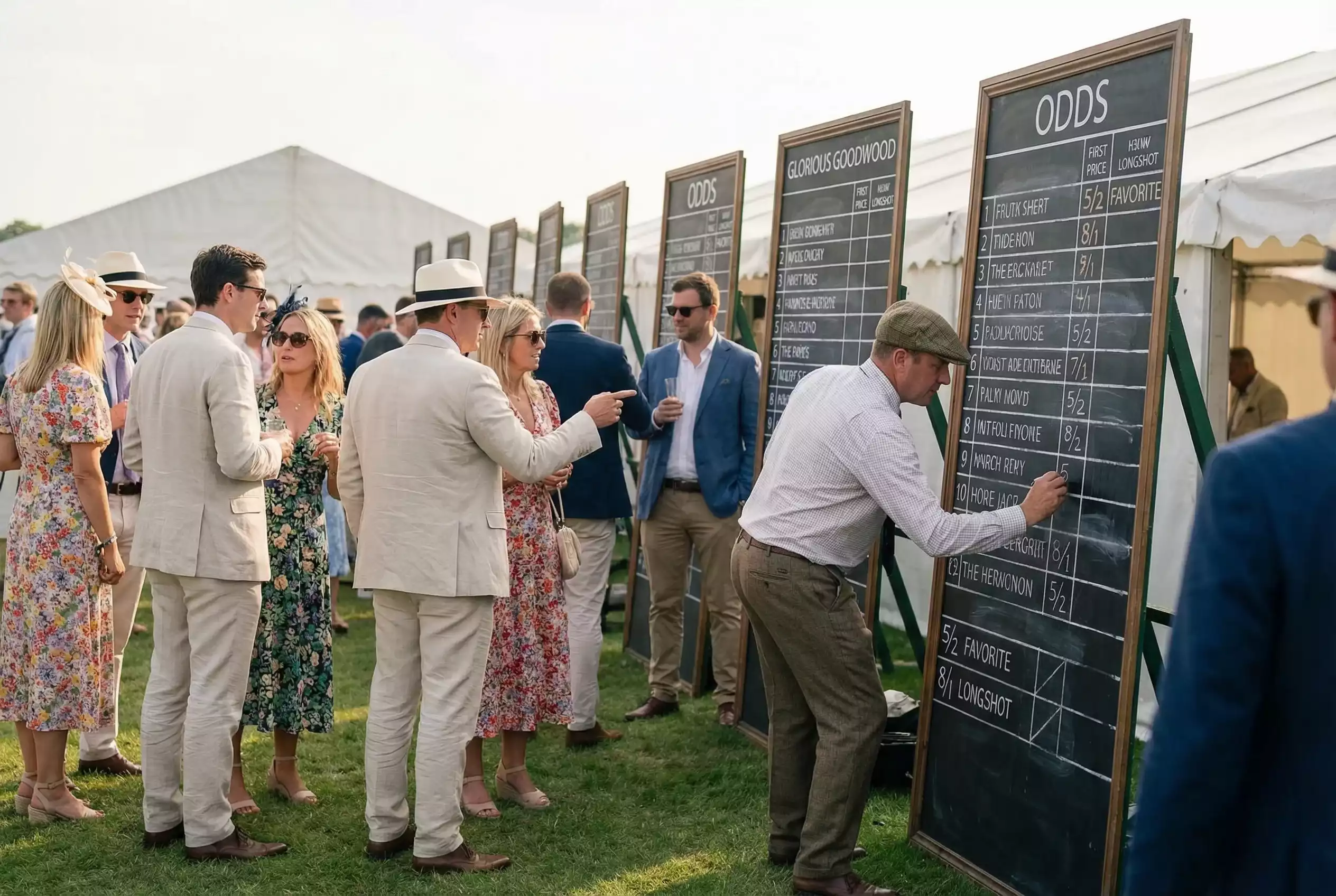
Goodwood operates as a cashless venue, which means no banknotes, no coins, and no ATMs anywhere on the racecourse. All official betting points, food outlets, and bars accept debit cards only. If you arrive with a wallet full of cash expecting to walk up to the Tote window and hand over a tenner, you will be turned away. The sole exception is the ring of independent on-course bookmakers, who still accept cash at their pitches — a quirk that catches first-timers off guard and sends experienced punters straight to the rails bookies when they want to avoid a card transaction trail.
This cashless policy is worth understanding before you discuss bet types, because it shapes the practical options available to you on the day. There are essentially three ways to place a bet at Goodwood: through the Tote (pool betting, where your stake goes into a shared pool and the dividend is calculated after the race), through on-course bookmakers in the betting ring (fixed-odds betting, where you lock in a price at the moment of the transaction), and through your mobile phone using an online bookmaker's app. Each has its own characteristics, and the choice depends on what you value — guaranteed odds, potential for a bigger payout, or convenience.
The Tote works on a pool system: your stake goes into a shared pool, and the final return depends on how much money backed each horse. When a longshot wins, the Tote can return significantly more than fixed odds because the pool has been inflated by losing stakes on shorter-priced horses. The Placepot — where you need to find a placed horse in each of the first six races — is particularly popular at Goodwood, where large fields and unpredictable results generate substantial pools.
On-course bookmakers offer fixed-odds betting: you compare prices chalked on their boards, agree a bet, and the odds are locked in before the stalls open. At Goodwood, the independent bookies are the only ones who take cash, and their pitches can get crowded on big-race days. Mobile betting has become the dominant channel for many racegoers, and at a cashless venue it makes even more sense. Online bookmakers typically offer better each-way terms, and you have access to live streaming, cash-out options, and real-time price comparison. The trade-off is atmosphere: staring at your phone while a Group 1 finishes a few hundred metres away diminishes the racecourse experience.
The four main bet types you will encounter are Win, Each Way, Forecast, and Accumulator. A Win bet is the simplest — your horse must finish first. An Each Way bet splits your stake in half: one on the horse to win, one on it to place (typically top two in fields of five to seven, top three with eight or more, and top four in handicaps with sixteen-plus runners). Each-way betting is particularly relevant at Goodwood because the large handicap fields mean place terms of one-quarter the odds on four places can offer meaningful returns even when your selection finishes third or fourth. A Forecast requires you to predict the first two finishers in the correct order. An Accumulator links multiple selections across different races into a single bet; all legs must win for a return. Accumulators are popular at festivals but mathematically brutal: four legs at average odds of 4/1 each produce a combined probability of roughly 0.16%.
Draw Bias: Why Stall Position Matters
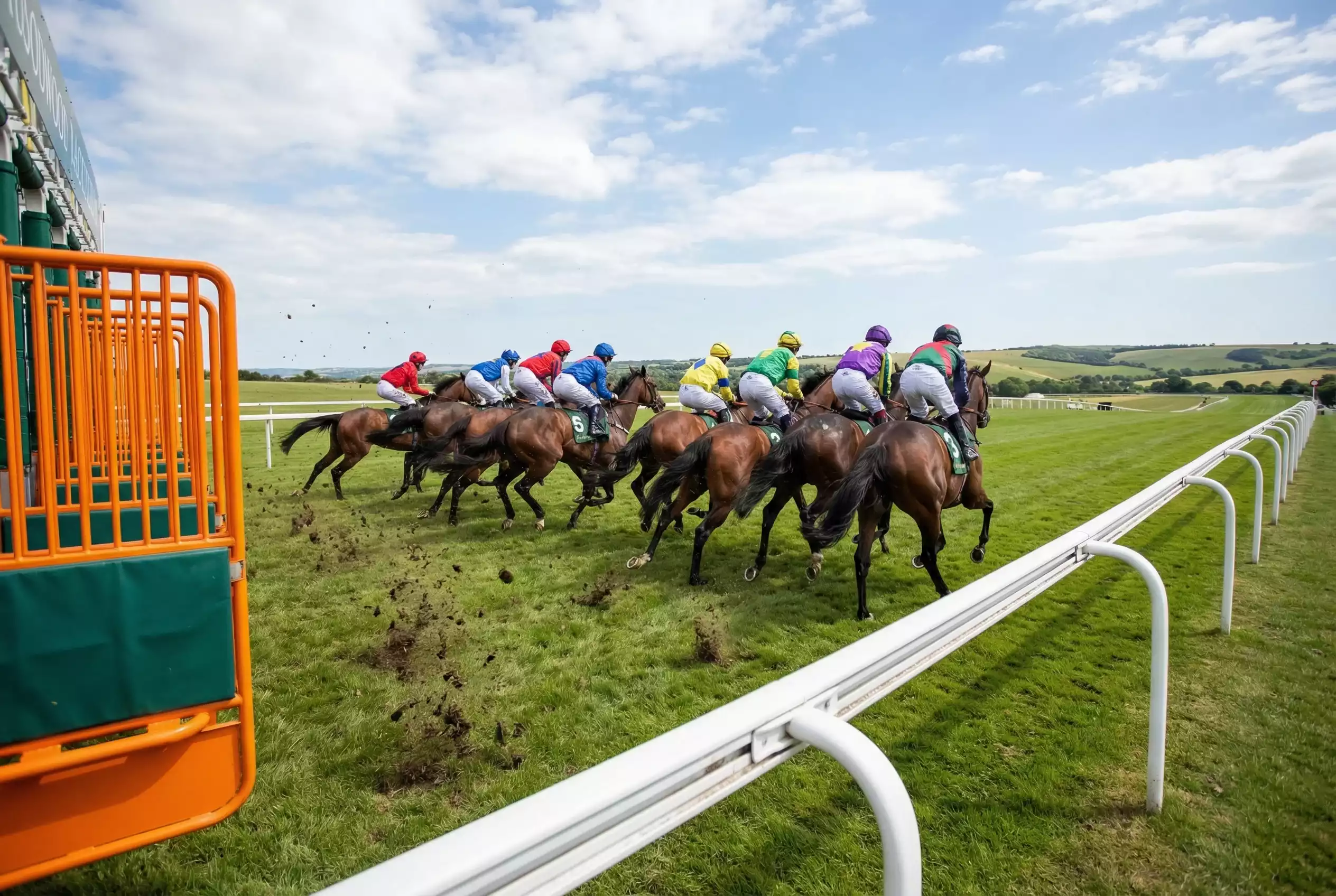
At most British flat racecourses, the stall you break from is a footnote. At Goodwood, it can be the headline. The course's topography — a pronounced right-hand camber that runs through the sprint distances, combined with rising ground toward the three-furlong pole and a sweeping descent into the home straight — creates persistent stall biases that show up consistently across thousands of race results. Understanding draw bias at Goodwood is not a niche exercise for data obsessives; it is a fundamental part of any serious betting approach to the festival.
The effect is most extreme over five furlongs. Goodwood's five-furlong course is one of the fastest in the country, a downhill blast where the field barely has time to rearrange itself after the stalls open. The inside rail provides a shorter path around the camber, and the numbers confirm the advantage: stall one at five furlongs produces roughly twice as many winners as any other individual stall position. If your fancy is drawn wide in a five-furlong sprint at Goodwood, you need an exceptional reason to keep the bet alive — a significant class edge, a proven ability to overcome a poor draw, or going conditions soft enough to neutralise the rail advantage.
At six furlongs, the picture shifts slightly but remains significant. The worst-performing stall over this distance is stall seven, which has generated an LSP of minus 72.82 over five years. That is not a marginal penalty; it represents a sustained, statistically significant loss for anyone backing horses drawn there at starting price. The camber on the bend pushes wide-drawn runners off their line, costing them ground and forcing jockeys to use energy repositioning — energy that is unavailable for the finish. Low draws at six furlongs do not guarantee success, but high draws carry a measurable handicap.
Seven furlongs introduces a more nuanced bias. Data from Geegeez's PRB analysis covering 2016 to 2023 shows that low stalls produced a Percentage of Rivals Beaten figure of 0.54, middle stalls hit 0.50, and high stalls managed just 0.46 at this trip. That gap — eight percentage points between low and high — is meaningful enough to influence your shortlist but not so overwhelming that it should eliminate a well-fancied high-drawn runner outright. The crucial modifier at seven furlongs is pace. Horses drawn high who adopt front-running tactics produce an Impact Value of 1.43, meaning they win 43% more often than expected. Pace, in other words, can override the stall disadvantage — but only if the horse has the natural speed to lead from the break.
Once the distance extends to a mile and beyond, the draw bias largely fades. Analysis by DrawBias.com finds no statistically significant stall bias at one mile and seven furlongs, because Goodwood's long finishing straight allows horses from any position to settle, rebalance, and deliver their challenge on merit. The one exception is stall two at the straight mile, which has returned an LSP of +152.15 over five years — the most profitable single stall-distance combination on the course. Whether this is a genuine persistent advantage or a statistical artefact inflated by a few big-priced winners is debatable, but it is worth noting when you are assessing runners in mile races.
The practical takeaway is straightforward. On sprint days — Tuesday's supporting card, Friday's King George, Saturday's Stewards' Cup — check the draw before you check the form. On mile-plus races, give it a glance but do not let it override your class and pace assessments. The full draw-bias breakdown, including a stall-by-distance heatmap and pace-interaction data, is available in the dedicated draw-bias analysis article.
Trainers and Jockeys Worth Following

The instinct when looking at trainer statistics is to follow the one with the most winners. At Goodwood, that instinct costs money. Andrew Balding leads the five-year win count at Goodwood with 46 victories, but backing every one of his runners at starting price would have left you in the red. Volume does not equal value. The market prices Balding's runners accurately — or even slightly short — because his name recognition and stable strength ensure his horses are rarely available at generous odds.
The trainer who actually makes punters money at Goodwood is Ralph Beckett. Over the same five-year period, Beckett has saddled 28 winners at the course, generating a Level Stakes Profit of +117.31 — comfortably the highest of any trainer with a meaningful sample size. His each-way record is equally striking: 67 placed runners at an each-way LSP of +58.34. What this means in practice is that Beckett's horses are systematically underrated by the market at Goodwood. They run well at prices that overstate the risk. Whether this reflects course knowledge, a preference for the type of horse that handles undulations, or simply a yard that peaks in late July is difficult to isolate, but the profit line is real and actionable.
A second tier of profitable trainers exists below Beckett, though the margins are thinner and the sample sizes smaller. When assessing trainers for Goodwood festival betting, the key question is not who wins the most but who wins at odds that beat the market. LSP strips out the noise of short-priced favourites and exposes the trainers whose runners consistently outperform expectations. The full five-year profit table, including each-way angles by trainer, is broken down in the dedicated trainer and jockey statistics article.
On the jockey side, Oisin Murphy has established himself as the rider to follow at Glorious Goodwood. Murphy was the leading jockey at the 2025 festival with six winners, the second consecutive year he topped the table. His record reflects a combination of factors: strong relationships with Goodwood-specialist trainers, an understanding of how to ride the track's cambers and gradients, and the tactical discipline to sit off the pace on courses where front-runners can get drawn wide. Murphy's success is not just about talent — it is about course intelligence, which at Goodwood matters more than raw riding ability.
Behind Murphy, several jockeys maintain strong course records that do not always attract proportional market attention. The value, as with trainers, lies in identifying riders whose win rate at Goodwood exceeds their overall strike rate — a signal that they possess specific course skills that the betting market has not fully priced in. When a profitable trainer books a course-specialist jockey, the combination amplifies the edge. These pairings, and the win percentages they produce together, are mapped in the trainer-jockey combinations section of the cluster article.
The broader point for your Goodwood strategy is this: build a shortlist of trainers and jockeys based on profitability data, not reputation. Cross-reference that list with draw positions and going preferences, and you have a filtering system that narrows the field before you even look at individual horse form. Follow the profit, not the popularity.
Going Conditions and Their Effect on Your Bets
Goodwood sits on chalk downland, which means its turf drains faster than clay-based courses but also dries out more quickly in summer heat. The baseline going for the festival is typically good to firm — the condition that most trainers target and the state in which Goodwood's draw biases are at their most pronounced. Seamus Buckley, a former clerk of the course, described the ideal flat racing surface at Goodwood as good to firm with a touch of moisture and a grass length of around four inches. That description captures the sweet spot: firm enough for the ground to ride fast, with just enough give to protect horses' legs over five days of competitive racing.
When the going moves away from that baseline, the entire dynamic of the festival shifts. Softer ground — the result of summer rain, which is never unlikely on the Sussex coast — reduces the draw advantage in sprints by slowing the pace and making it harder for inside-drawn horses to exploit the rail. On soft going, the five-furlong stall-one dominance that defines firm-ground sprints is significantly diluted, because the speed differential between rail and wide decreases when every horse is working harder through the surface. Punters who have built their selections around draw data need to recalibrate if the going changes overnight.
Firmer ground tends to favour speed horses and front-runners. The Goodwood track, with its downhill sections and cambers, amplifies the advantage of horses who can break sharply, grab the rail, and control the pace from the front. When the going is quick, positional speed becomes almost as important as raw ability. In contrast, heavy or soft conditions tend to bring stamina into the equation even in sprint races, giving hold-up horses time to make ground in the straight and reducing the penalty for a wide draw.
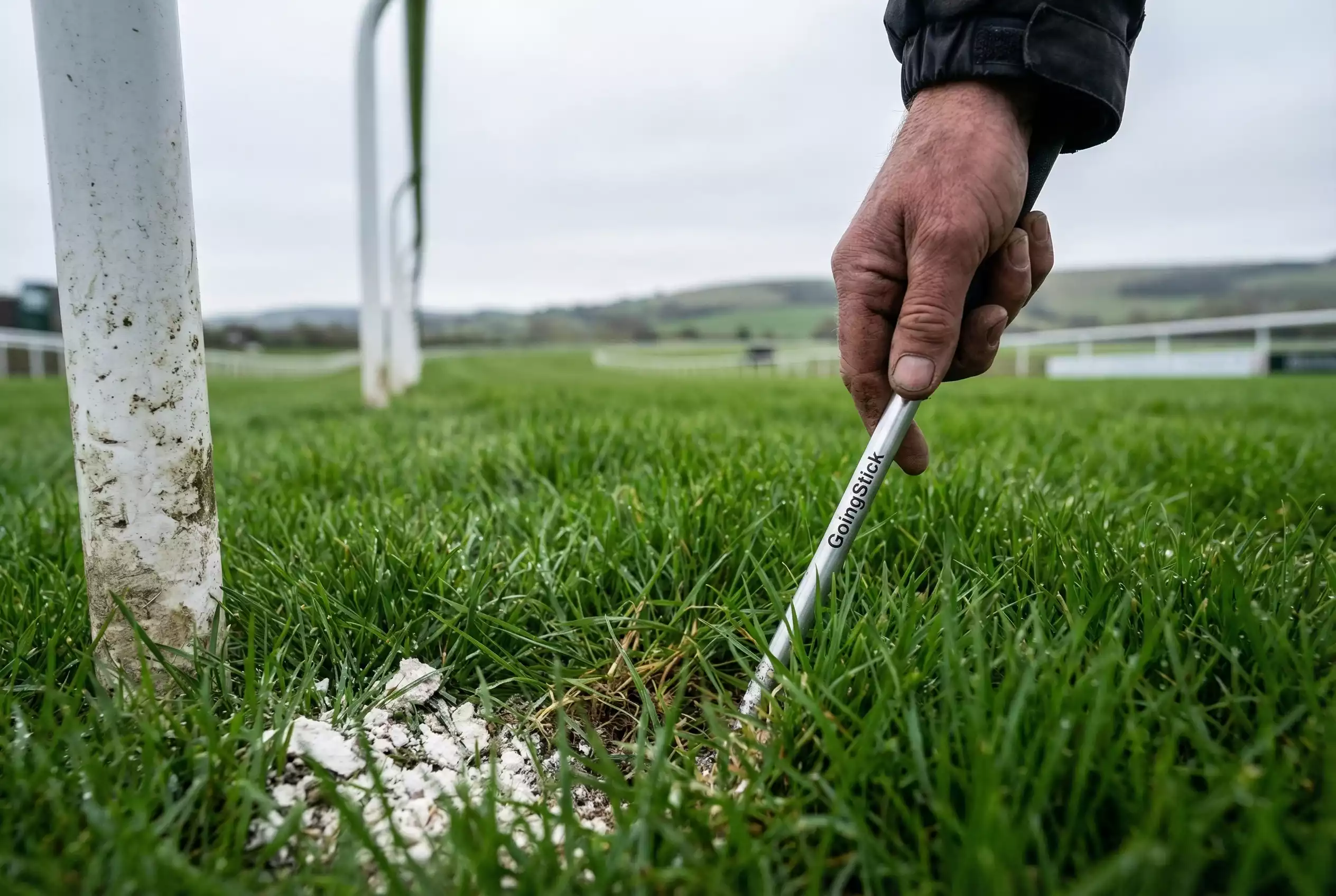
The GoingStick — an electronic device used by clerks of the course to measure turf penetration — provides an objective reading that supplements the traditional verbal descriptions. GoingStick readings at Goodwood typically range from around 7.0 on a firm day to below 5.0 when the ground has taken significant rain. Tracking these readings across the week of the festival is essential, because the going can change between the morning inspection and the first race, and again between races if showers arrive. The dedicated going-conditions article includes historical GoingStick data and a guide to adjusting your form assessments based on ground changes.
For practical purposes, the key rule at Goodwood is this: firm going amplifies the draw bias and favours course specialists; soft going compresses the field and opens the door to horses with stamina reserves who might otherwise struggle on a fast surface. When the going report shifts mid-festival, your betting approach should shift with it. Stubbornness in the face of changing ground conditions is one of the most expensive habits in racing.
Building a Betting Strategy for the Full Festival
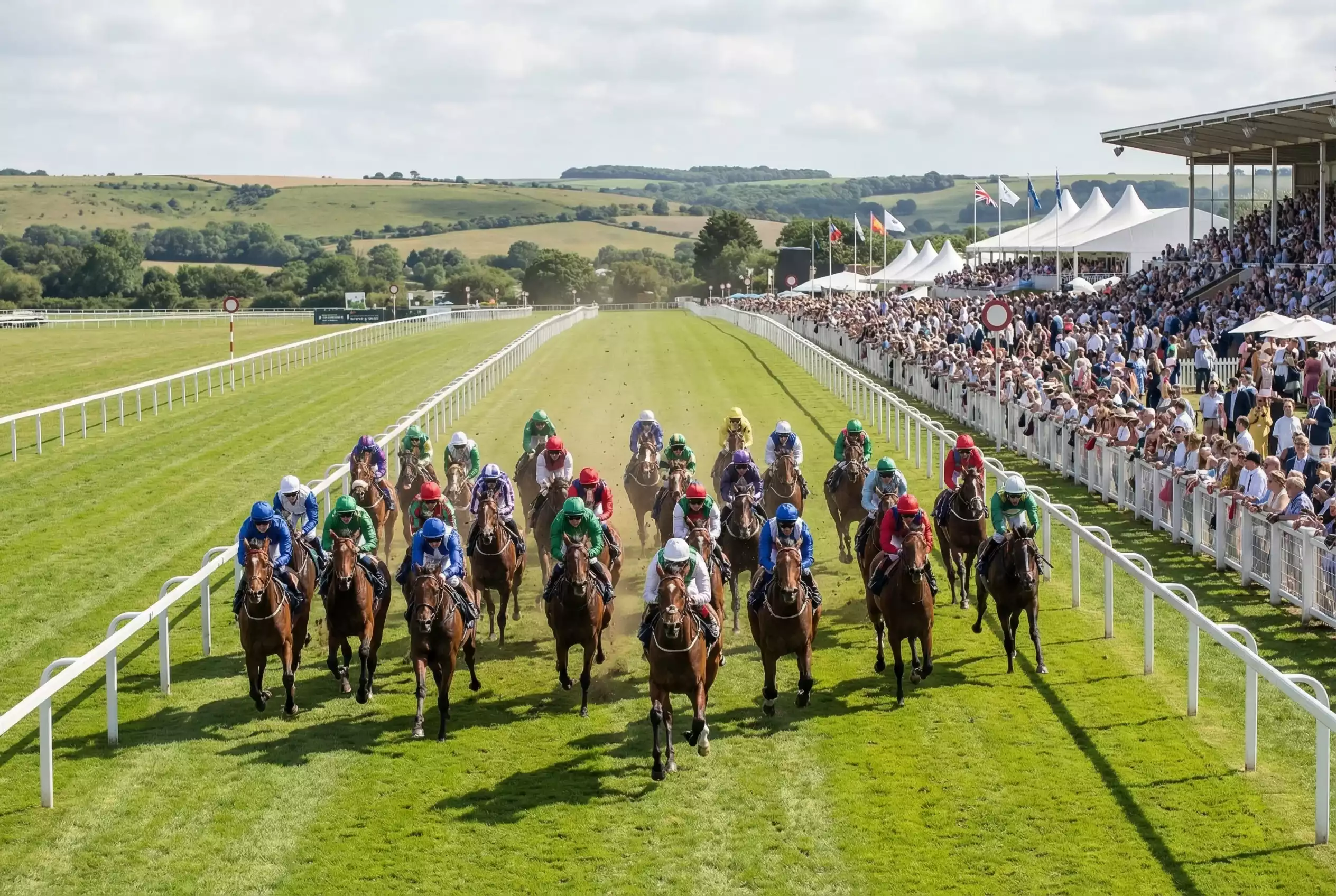
A five-day racing festival is not five separate betting days — it is a single campaign that requires a budget, a plan, and the discipline to walk away from races that do not meet your criteria. The first step is bankroll allocation. Decide before the meeting begins how much you are prepared to lose across all five days, divide that figure into daily portions, and within each day, allocate stakes by confidence level. A workable split is 60% of your daily budget on two or three strong selections and 40% distributed across speculative bets — each-way plays in big-field handicaps, for instance, or small-stakes doubles on races where you have an opinion but not conviction. The moment your daily allocation is gone, the day's betting is over. No chasing. No dipping into tomorrow's pot.
Timing matters at Goodwood, and it connects directly to market behaviour. Ante-post markets for the festival open weeks in advance, sometimes as early as the spring, and prices at that stage can be significantly larger than what you will find on the morning of the race. The trade-off is risk: if your selection is withdrawn — through injury, a change in going preference, or a trainer's decision to wait for a different meeting — your stake is usually lost. Day-of-race betting eliminates non-runner risk but compresses the available value, because the market has had time to absorb all available information. A sensible strategy blends both: take ante-post positions on horses you believe are underrated by the early market, and keep a portion of your bankroll liquid for day-of-race opportunities that emerge from the draw, going changes, or late market moves.
The seasonal context is worth understanding. According to data from the Gambling Commission's participation survey, the proportion of UK adults who had placed a bet on horse racing in the previous four weeks rose to 7% during April to July 2025, up from 4% in the January to April period — a three-percentage-point seasonal jump that correlates directly with the Royal Ascot and Goodwood window. More money flowing into the market during this period tends to sharpen prices on favourites while occasionally leaving value at the lower end of the market, where casual punters are less active.
At the same time, overall betting turnover on British racing has been declining. The BHA's 2025 Racing Report recorded a 4.3% drop in total wagering turnover compared with 2024, extending a trend that saw average turnover per race fall by 5.6% year-on-year and 11.6% against 2023. Richard Wayman, the BHA's Director of Racing, has observed that "the horse population continues to decline and the betting environment remains challenging" — Richard Wayman, Director of Racing, BHA. For the individual punter, this decline has a practical implication: thinner markets can mean wider spreads between best and worst available odds, making price comparison across bookmakers more important than ever.
Value betting is the framework that ties everything together. The principle is simple: you only bet when you believe the true probability of a horse winning is higher than the probability implied by its odds. If a horse is priced at 10/1, the market implies a roughly 9% chance of winning. If your own assessment — based on draw data, trainer profitability, going preferences, and pace analysis — suggests a 14% chance, you have an overlay of five percentage points. Over time, consistently identifying and backing overlays produces profit, regardless of whether any individual bet wins or loses. The difficulty, of course, is in making honest probability assessments rather than inflating them to justify a bet you want to place.
At Goodwood specifically, value tends to cluster in three areas. First, horses drawn favourably in sprint handicaps that the market has not fully adjusted for — draw bias is well known in racing circles but still underpriced in the odds on specific horses. Second, runners trained by profitable course specialists like Ralph Beckett, whose horses systematically outperform their odds. Third, each-way bets in big-field races where the place terms offer a genuine safety net: a horse at 16/1 each way in a 20-runner handicap with four places at one-quarter odds returns nearly 5/1 for a place finish alone. Stack enough of those across a five-day festival and the mathematics begin to work in your favour.
Choosing a Bookmaker for Goodwood
The bookmaker you use during the Goodwood festival is not a neutral variable — it directly affects the return on every winning bet. Odds vary meaningfully across operators, especially in the ante-post period and on the morning of each race, and a few percentage points of difference in price compound across a five-day meeting into a substantial gap in total profit or loss. The choice is not about loyalty to a brand; it is about systematically securing the best available terms on every wager.
The first criterion is odds competitiveness. Some bookmakers consistently price certain race types more generously than others — one may be sharp on Group races but tight on handicaps, while another offers better value in big-field sprints. Having accounts with at least three or four operators and checking the odds across all of them before placing a bet is the minimum viable approach. This is not complicated: odds-comparison tools aggregate prices in real time, and a thirty-second check can add a full point to your price on a 10/1 shot.
Each-way terms are the second consideration, and they matter enormously at Goodwood. The festival's large-field handicaps — the Stewards' Cup, the Golden Mile, the Goodwood Stakes — regularly attract fields of 15 to 28 runners, and the difference between quarter-the-odds and one-fifth-the-odds on the place part of your each-way bet is significant over a series of bets. Some bookmakers offer enhanced each-way terms on festival specials — paying five places instead of four, or bumping the fraction to a third of the odds. These offers do not always represent genuine value (the win price may be trimmed to compensate), but when the win odds are competitive and the place terms are enhanced, the combination is worth taking.
Live streaming and in-play markets are relevant if you plan to bet from home or use your phone at the racecourse. Not all operators stream the same races, and the quality of the stream varies — a laggy feed that runs thirty seconds behind the on-course action is worse than useless for in-play purposes. If live betting is part of your strategy, test the streaming quality before the festival starts, ideally during an earlier Goodwood fixture. Cash-out options, which allow you to settle a bet before the race finishes at a reduced profit or limited loss, are offered by most major operators, but the margins built into cash-out prices are steep. They are best treated as an emergency exit rather than a regular tactic.
Promotions and free-bet offers peak during the festival period. Every major bookmaker will run Goodwood-specific campaigns: money-back specials on beaten favourites, free bets tied to specific races, and enhanced accumulators. Some are genuine value — a money-back offer on the Stewards' Cup favourite effectively gives you a free shot at a race where the favourite loses seven times out of ten. Others come with wagering requirements that erode the benefit to near zero. Read the terms before opting in, and treat the free-bet component as a bonus rather than a reason to choose one operator over another. The best bookmaker for Goodwood is the one that consistently gives you the longest price, the best each-way terms, and the least hassle when you want your money back.
Goodwood Betting: Frequently Asked Questions
Does the draw matter at Goodwood?
Yes, and more than at almost any other British flat racecourse. The draw effect is strongest at sprint distances. Over five furlongs, stall one produces approximately double the winners of any other individual position, because the inside rail provides a shorter path around Goodwood's pronounced right-hand camber. At six furlongs, stall seven is the worst position on the course, with a five-year Level Stakes Profit of minus 72.82. At seven furlongs, low stalls beat high stalls by a Percentage of Rivals Beaten margin of 0.54 to 0.46. The advantage diminishes over a mile and beyond, where Goodwood's long finishing straight allows horses from any stall to settle into position. Practically, this means the draw should be a primary filter in sprint betting and a secondary consideration in mile-plus races. Going conditions also modify the bias: soft ground reduces the inside-rail advantage, while firm going amplifies it. Checking the draw in isolation is not enough — you need to cross-reference it with the going report on the day.
What are the best betting strategies for Glorious Goodwood?
The most effective strategies combine data-driven filters with disciplined bankroll management. Set a total budget for the five-day festival and divide it into daily portions to prevent overspending early and chasing losses later. Use draw bias data to filter sprint runners: low draws in five- and six-furlong races carry a measurable statistical edge. Cross-reference form with trainer profitability rather than raw win counts — some of the most-backed trainers at Goodwood actually lose money at level stakes. Each-way betting in big-field handicaps like the Stewards' Cup offers a built-in safety net, particularly when place terms extend to four or five places. Monitor the going throughout the festival: a shift from good to firm to good can alter draw dynamics and pace profiles. Finally, blend ante-post bets placed weeks ahead at larger prices with day-of-race wagers that account for the final draw and going. The punters who profit consistently at Goodwood treat the festival as a structured campaign, not a series of isolated punts.
Who are the most profitable trainers and jockeys at Goodwood?
Over the past five years, Ralph Beckett has been the most profitable trainer at Goodwood by Level Stakes Profit, returning +117.31 from 28 winners. His each-way record is similarly strong, with 67 placed runners generating an each-way LSP of +58.34. Beckett's horses are consistently underpriced by the market at this track — they run well at odds that overestimate the risk. By contrast, Andrew Balding leads the win count with 46 victories over the same period but is in the red on LSP, meaning the market prices his runners accurately or even slightly short. The lesson is clear: following the most prolific winner costs you money, while following the most profitable trainer builds your bankroll. Among jockeys, Oisin Murphy has been the dominant force at Glorious Goodwood, finishing as the leading rider at the 2025 festival with six winners — his second consecutive year atop the table. Murphy's combination of tactical intelligence, course knowledge, and relationships with Goodwood-specialist trainers makes him the first name to look for when assessing jockey bookings for the festival.
Responsible Gambling
Betting on horse racing is regulated in the United Kingdom by the Gambling Commission, and all licensed bookmakers operating at Goodwood or online are required to offer tools that help you stay in control. These include deposit limits, loss limits, reality checks that alert you to how long you have been betting, and self-exclusion options that lock you out of your account for a set period. If you find that your betting is causing financial stress, relationship difficulties, or a preoccupation that interferes with daily life, these tools exist for exactly that reason. Use them.
The rise of unlicensed betting operators makes this point more urgent than it might appear. According to a report by the International Federation of Horseracing Authorities, unique visitors to unlicensed gambling websites in the UK surged by 522% between August 2021 and September 2024. These sites operate outside the regulatory framework, meaning they offer no deposit limits, no self-exclusion, and no recourse if something goes wrong. They are not a cheaper or more convenient alternative — they are unregulated environments that strip away every consumer protection that licensed operators are legally required to provide. Betting through a Gambling Commission-licensed bookmaker is not just a recommendation; it is the only way to ensure that your activity is covered by the protections the regulatory system was designed to deliver.
At a five-day festival like Glorious Goodwood, the volume of races and the social atmosphere can accelerate spending in ways that feel manageable in the moment but look different on Monday morning. Setting a firm budget before the meeting — and genuinely sticking to it — is the single most effective responsible gambling measure available to you. Beyond that, resources such as BeGambleAware offer confidential advice and support, while GamStop provides a free self-exclusion service that blocks you from all licensed UK gambling sites for a period of your choosing. If you are attending the racecourse, Goodwood itself offers quiet areas and staff trained to assist anyone who needs support.
This guide is designed to help you bet more intelligently, not more often. The data, strategies, and filters discussed throughout these pages work best when applied selectively — sitting out a race because the information does not support a confident bet is as much a part of a winning strategy as backing a well-researched selection. Gambling should remain an enjoyable part of the racing experience, not its defining feature. You must be 18 or over to bet in the United Kingdom.
