
 Available in US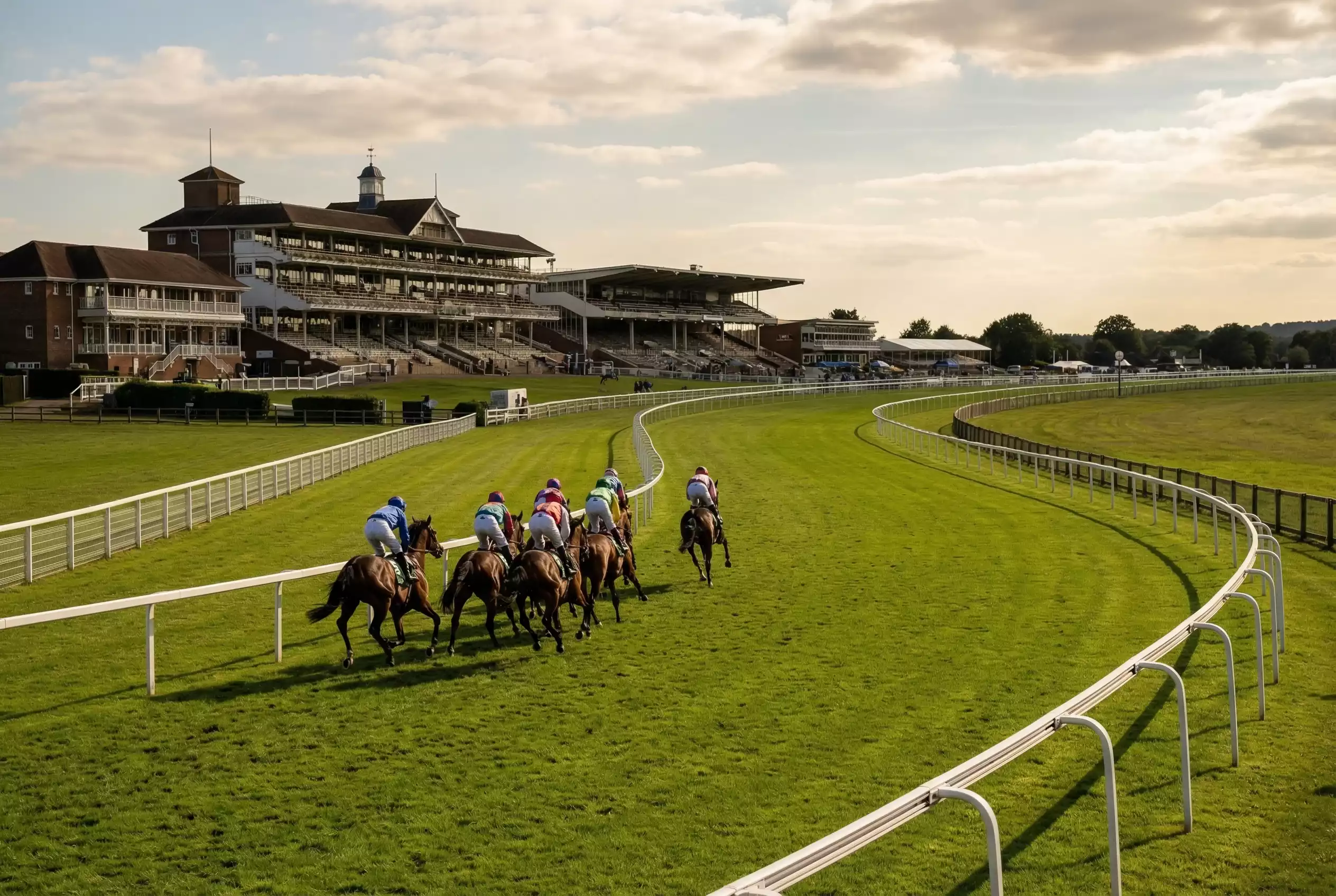
The Second Jewel in the Staying Crown
Goodwood Cup odds tell you something the formbook cannot quite capture: how the market values stamina, heart and the willingness to grind through two miles on one of Britain’s most demanding tracks. This is the race where stamina legends are crowned, the Group 1 contest that sits directly behind the Ascot Gold Cup in the staying hierarchy and — for many punters — offers a more readable betting proposition than its more celebrated rival.
Staged on the Thursday of the Qatar Goodwood Festival, the Goodwood Cup carries a prize fund of £500,000, a figure that has grown steadily under Qatar sponsorship and now attracts the best stayers in training. Fields are typically compact — six to ten runners — which means every horse in the line-up has a legitimate chance on paper. That compression is what makes Goodwood Cup betting simultaneously appealing and treacherous: there are no passengers, and the market has limited room to hide value in plain sight.
What sets this race apart is the course itself. Goodwood’s undulations, the right-hand turn into the straight, and the relentless final three furlongs uphill make it a genuine stamina examination. Horses that win the Gold Cup on Ascot’s flat, galloping surface do not always reproduce that form here. Understanding why — and when to trust or oppose the Gold Cup form — is the foundation of any serious Goodwood Cup betting strategy.
Goodwood Cup Betting — More on this topic at goodwood betting.
Legends of the Cup: Stradivarius and Beyond
No conversation about the Goodwood Cup begins without Stradivarius. Bjorn Nielsen’s remarkable stayer won this race four consecutive times between 2017 and 2020, a sequence that no other horse has matched in the modern era. What made those victories instructive rather than merely impressive was the variety of ways Stradivarius won. He led from the front, he came from behind, he ground out narrow victories and he cruised clear. Each renewal required a different tactical approach, and Frankie Dettori delivered every time. For punters, the lesson was clear: back the horse that can adapt to whatever scenario unfolds, not the one that needs everything to fall right.
Stradivarius eventually returned for a fifth attempt in 2021 and was beaten. That defeat mattered because it showed where even the greatest stayers become vulnerable — age, ground and the emergence of a younger rival all played a part. The cycle of dominance and decline is the story of the Goodwood Cup, and recognising where a horse sits in that cycle is one of the most valuable skills in staying-race betting.
Before and alongside Stradivarius, Aidan O’Brien has been the dominant training force over the past two decades. O’Brien has saddled four Goodwood Cup winners in twenty years, including Yeats in 2006 and 2008, and Kyprios in 2022 and 2024. The Ballydoyle operation targets this race with precision, typically sending over a horse that has already proven its stamina credentials at Ascot. When an O’Brien runner appears in the Goodwood Cup declarations with a Gold Cup run behind it, the market takes notice — and the price contracts accordingly.
The legacy of these repeat winners shapes how bookmakers frame the race. A defending champion or a proven Goodwood performer will almost always trade shorter than their form strictly warrants, because the market prices in track knowledge and the psychological edge of having won before. That creates a recurring opportunity: the progressive stayer making its first Goodwood Cup appearance, arriving with strong but unfamiliar form, often represents better value than the household name.
Form Lines: Ascot Gold Cup to Goodwood Cup
The Gold Cup at Royal Ascot is run in June, roughly five weeks before the Goodwood Cup. That gap is short enough for form to remain reliable and long enough for conditions to change. The most common mistake punters make is treating the Gold Cup result as a direct preview of the Goodwood Cup, when in reality the two races reward slightly different attributes.
Ascot’s Gold Cup unfolds on a flat, right-handed track where pace tends to be even and sustained. The best horse on the day usually wins because there are fewer variables to complicate the picture. Goodwood introduces complications. The course is undulating, the camber through the turn into the straight can unbalance a horse mid-race, and the uphill finish asks a different question of stamina. A horse that powered home at Ascot on fast ground may struggle at Goodwood if the ground has taken rain or if its action does not suit the terrain.
The strongest Ascot-to-Goodwood angle involves horses that ran well at Ascot without winning. A close second or third in the Gold Cup, especially if beaten by a specialist that will not reappear, often represents the best value in the Goodwood Cup market. These horses arrive with proven staying form, likely improvement to come, and odds that reflect their Ascot defeat rather than their Goodwood potential.
Conversely, be cautious with the Gold Cup winner itself. The market almost always prices the Ascot winner as favourite at Goodwood, yet the strike rate of Gold Cup winners in the Goodwood Cup is lower than you would expect given their price. Fatigue, the quick turnaround, and the different track demands all play a role. Blindly following the Gold Cup winner at odds-on is one of the less profitable strategies in staying-race betting.
Pace and Tactics at Two Miles
Two-mile races are not won by speed. They are won by the conservation and deployment of energy, and Goodwood’s layout makes that principle more acute than at most tracks. The course rises and falls through the first mile, drops downhill approaching the turn, and then climbs steadily to the finish. A horse that expends too much effort maintaining position through the undulations will have nothing left for the final hill.
Front-running is a particularly risky strategy in the Goodwood Cup. The horse setting the pace absorbs all the energy cost of navigating the course profile, while those tracking behind get a tow and save fuel. In small fields, the pace is often slow through the first half of the race, with jockeys walking and watching each other. That creates a scenario where the finish comes down to acceleration over the final two furlongs rather than sustained galloping — which is why closers and horses with a proven turn of foot tend to prevail.
For punters, identifying the likely pace scenario is one of the most useful pre-race exercises. If the field contains a confirmed front-runner, the race may be run at a tempo that favours hold-up horses. If no one wants the lead, you get a sprint finish where raw speed over the final quarter-mile matters more than staying power. Either way, the horse that handles the tactical ambiguity best — the one that can sit second or third and quicken when asked — is usually the right bet.
Market Approach: Small Fields, Short Prices
The Goodwood Cup typically attracts between six and ten runners. That compressed field size has a direct impact on how you should bet. Each-way terms — usually a quarter of the odds for the first three places — offer thin value when only six or seven run. If the favourite is trading at 2/1 in a seven-runner field, the each-way place part pays you 1/2 for a top-three finish. The reward barely justifies the risk. In most Goodwood Cup renewals, a win-only approach makes more financial sense.
See also Nassau Stakes Betting.
Favourites have a stronger record in the Goodwood Cup than in big-field handicaps, which stands to reason: small fields contain fewer variables and the best horse on paper has fewer obstacles to navigate. Over the past fifteen years, favourites have won approximately one in three renewals. That is a respectable strike rate but not one that generates consistent profit at typical favourite prices. The value usually lies with the second or third choice in the market — the horse priced between 3/1 and 7/1 that has a clear path to victory if the favourite underperforms.
Ante-post betting is less appealing for the Goodwood Cup than for bigger races. The small field means one withdrawal can transform the dynamics entirely, and the going can change enough between declaration day and race day to shift the entire form picture. Betting on the morning of the race, once you have seen the going report and confirmed the runners, tends to produce better outcomes than locking in a price weeks in advance.
Finally, consider the race in the context of your broader festival strategy. The Goodwood Cup is run on Thursday, with the bigger-field handicaps still to come later in the week. If your Cup selection loses, resist the temptation to chase losses in Saturday’s Stewards’ Cup — that is a different type of race requiring a completely different approach. Discipline across the five days is what separates a profitable festival from an expensive one.
