
 Available in US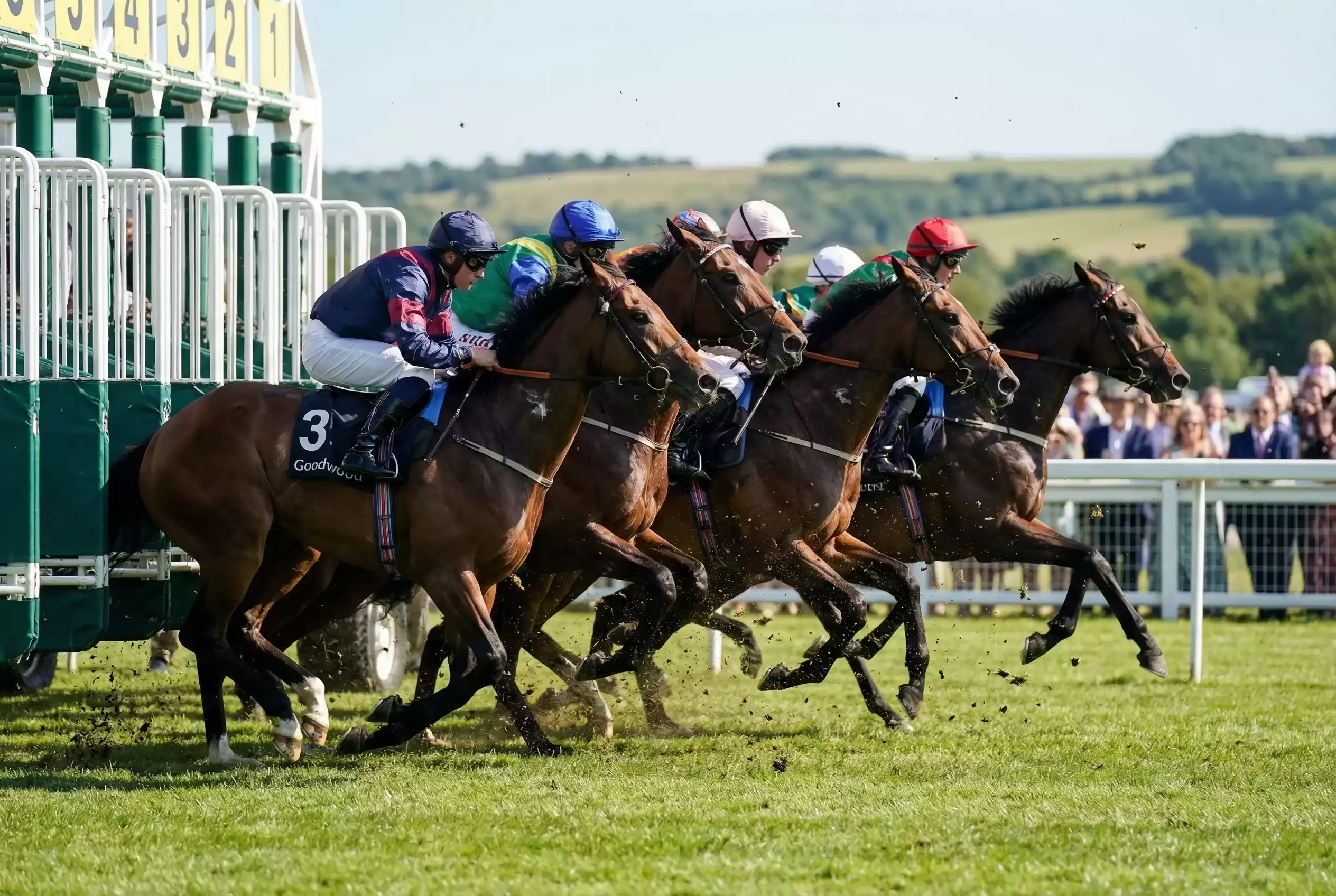
Five Furlongs of Controlled Chaos
King George Stakes Goodwood is five furlongs of controlled chaos on the fastest strip in Sussex, and the betting market knows it. This Group 2 sprint, run on the Friday of the Qatar Goodwood Festival, brings together the sharpest speedsters in training for a race that lasts barely a minute but generates more pre-race debate about stall positions, pace scenarios, and ground conditions than most Group 1 contests manage over a mile.
The race occupies a pivotal position in the sprint calendar. It sits between the July Cup at Newmarket — the mid-summer championship — and the Nunthorpe Stakes at York in August, which is the undisputed five-furlong crown jewel. For trainers and connections, the King George serves a dual purpose: it is a target in its own right for horses that thrive at Goodwood, and it is a final audition for the Nunthorpe for those with bigger ambitions. That dual function shapes the market in interesting ways, because not every runner is being aimed at peak performance on this particular day.
For punters, the King George offers something rare in top-level sprinting: a race where the course itself is a variable rather than a neutral stage. As one featured jockey at the festival put it, Goodwood is a unique track that offers a challenge riders relish — a beautiful racecourse and a meeting they always look forward to. That uniqueness is not just atmosphere. It is a betting factor. Goodwood’s five-furlong track is not a straightforward dash. It has terrain, camber, and a draw bias that must be factored into every selection. Understanding those elements is the price of admission.
King George Stakes at Goodwood — More on this topic at goodwood betting.
Five-Furlong Course Profile
Goodwood’s five-furlong course is one of the fastest in the country, and its layout explains why. The track runs virtually straight, with a gentle downhill gradient for the first two furlongs that allows horses to build speed rapidly before the course levels out and then rises slightly towards the finish. That profile means early pace is rewarded rather than punished — horses that break sharply and establish position in the first furlong have a significant advantage over those that need time to find their stride.
The camber is a less obvious but equally important feature. The track is not flat from rail to rail; there is a slight slope that pushes horses towards the stands’ rail. This is one reason why low draws — stalls closest to the inside rail — have a statistical edge over high draws. A horse drawn in stall one does not need to fight the camber; a horse drawn in stall twelve has to cross the slope while also travelling at close to forty miles per hour. That is a physical disadvantage that no amount of talent can entirely overcome.
The going surface adds another layer. In late July, the ground at Goodwood is typically good to firm, which suits speed horses and produces genuinely fast times. When rain arrives — and it does occasionally intervene even in a British summer — the course drains well but the character of the race changes. Softer ground reduces the advantage of early speed and gives hold-up horses a better chance of finishing strongly. Checking the going report on the morning of the race is essential for any five-furlong contest at this track.
Finally, the wind. Goodwood sits on the South Downs, exposed to prevailing south-westerly winds. A headwind in the final furlong turns the race into more of a stamina test and can blunt the finishing effort of horses that rely on raw speed. A tailwind has the opposite effect, producing quick times and favouring those who lead early. Raceday conditions matter here more than at sheltered, inland tracks.
Form Lines: July Cup to King George
The July Cup at Newmarket is the most obvious form reference for the King George, but the relationship between the two races is more nuanced than it first appears. The July Cup is run over six furlongs on a flat, galloping track. The King George is five furlongs on a course with terrain. Horses that excelled at Newmarket’s six may not reproduce that form when asked to sprint flat out from the stalls over a shorter trip on undulating ground.
The strongest July Cup angle involves horses that finished strongly over six furlongs but were beaten by a specialist miler stepping down in trip. These runners often have latent speed that was not fully tested at Newmarket, and the drop back to five furlongs at Goodwood can unlock a performance that the July Cup form did not quite advertise. Conversely, a July Cup winner who led throughout at Newmarket may find the King George a different proposition: Goodwood’s draw bias and camber can neutralise the advantage of early dominance.
Beyond the July Cup, look at recent form in five-furlong Listed and Group 3 races. Horses that have been competing at just below Group 2 level all summer sometimes make a step forward at Goodwood, particularly if they have course experience. A winner at Goodwood’s evening meetings in June, for instance, has already proven it can handle the track — and that experience is worth more than a length of form from a different course.
Horses coming from the Commonwealth Cup at Royal Ascot — a Group 1 for three-year-olds over six furlongs — represent an interesting sub-plot. The better three-year-olds occasionally drop back to five furlongs for the King George, and their age allowance combined with the class of Ascot form can make them dangerous. The risk is that the step down in distance may not suit if the horse relies on stamina rather than pure speed.
Draw and Pace at Five Furlongs
The draw is the single most important non-form factor in the King George Stakes. At five furlongs, there is no time to overcome a bad stall position — the race is over in approximately fifty-six seconds on fast ground, and the first two furlongs effectively decide the shape of the contest. Data from BritishRacecourses.org shows that stall one at five furlongs produces twice as many winners as any other individual stall position. That is not a marginal trend; it is a structural advantage built into the geometry of the course.
The reason is straightforward. Low draws give horses the shortest route along the inside rail, where the camber works in their favour. High draws force horses to travel further, often losing half a length before the race has properly begun. In a Group 2 sprint where the margins between first and fifth can be measured in fractions of a second, half a length at the start is an enormous deficit.
Pace compounds the draw advantage. Horses that break quickly from low stalls can establish a position on the rail and dictate the tempo. Those drawn high must either use extra energy to cross over to the rail — burning fuel they will need in the final furlong — or accept racing wide where the camber pulls them further from the ideal line. Neither option is attractive. The practical implication for punters is clear: in the King George, always check the draw before you check the form.
That said, the draw is not destiny. In fields of ten or fewer, the disadvantage of a high stall is reduced because there is less traffic and more room to manoeuvre. The draw advantage is most pronounced in bigger fields of twelve or more, where the wide runners are genuinely squeezed for space and forced into suboptimal positions. If the King George declaration produces a small field, you can afford to be slightly more relaxed about the draw. In a full field, treat it as a deal-breaker.
Market Angles
The King George Stakes typically attracts between ten and fifteen runners, which places it in a sweet spot for each-way betting. With place terms applying to the first three, a horse priced at 8/1 or longer offers a genuine return on the place part alone. In sprint races, where the form is compressed and any horse in the field can theoretically win on its day, each-way betting is a more sensible strategy than in the tighter Group 1 races earlier in the week.
See also Glorious Goodwood Day-by-Day Schedule & Highlights.
Favourites have a mixed record in this race. The compressed nature of sprint form means that the best horse on paper does not always deliver, especially when the draw conspires against it. Over the past ten years, the favourite has won roughly a quarter of renewals — a strike rate that is below breakeven at typical favourite prices. That statistic alone should make you cautious about backing the market leader unless the draw is in its favour and the going suits.
The most productive betting angle in the King George is to identify a horse with three attributes: a low draw, proven form on fast ground, and the tactical speed to be prominent from the start. If all three align, you have a strong candidate regardless of what the market says. If only two of the three are present, proceed with caution. If you can find only one, look elsewhere.
Ante-post betting is risky for the King George because the draw is not known until declarations, and the draw is such a decisive factor that a price taken before you know the stall number is essentially a blind bet. Wait for the final declarations, check the draw, assess the going, and then strike. The morning of the race is the optimal time to bet on this contest.
One final consideration: the King George is run on Friday afternoon, sandwiched between the Nassau Stakes and other high-quality races. The temptation to treat it as a casual punt between bigger events is real. Resist it. The sprint demands the same level of analysis as any other Group race at the festival, and the punters who consistently profit from it are those who treat the draw and pace data with the same seriousness they would bring to any Group 1.
