 Available in US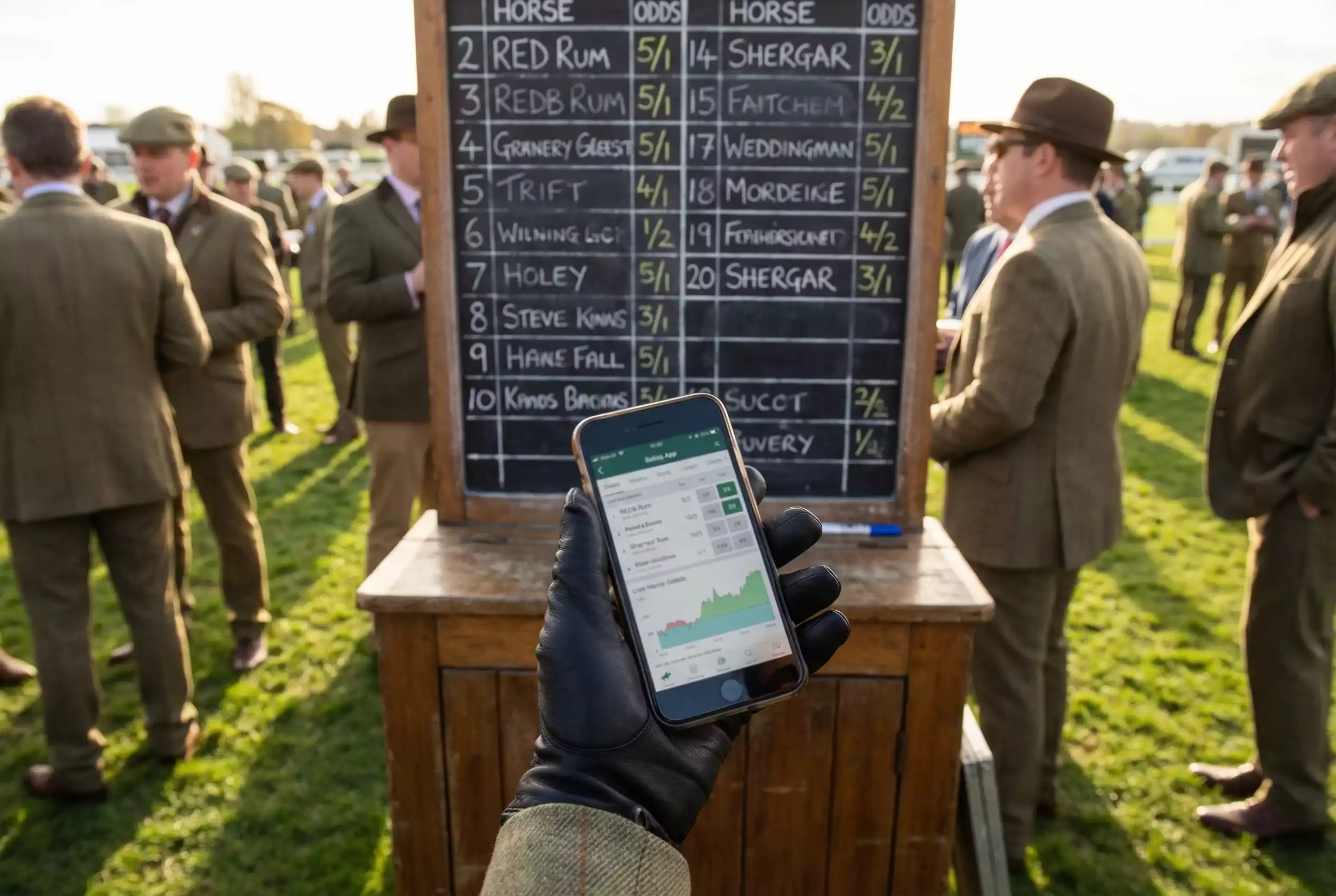
A Few Ticks in Odds Make a Season’s Difference
Best odds Goodwood punters can find are not always where they expect them. The difference between backing a horse at 7/1 with one bookmaker and 8/1 with another is a 14% increase in potential return — on the same horse, in the same race, at the same moment. Over the course of a five-day festival with multiple bets per day, those incremental gains compound into a difference that separates profitable punters from those who wonder where the money went.
The UK horse and sports betting market generates approximately £3.7 billion annually according to IBISWorld, and a significant portion of bookmaker profit comes from punters who accept the first price they see rather than shopping around. At Goodwood, where the range of race types and field sizes creates wide variation in market efficiency, the rewards for price comparison are particularly generous. A few ticks in odds make a season’s difference, and building the habit of checking multiple sources before every bet is one of the simplest ways to improve your long-term results.
The good news is that the festival’s high profile — bolstered by partnerships like the renewed multi-year deal between Goodwood and Visit Qatar, which Saad bin Ali Al Kharji, Chairman of Qatar Tourism, described as building on a proud legacy — drives fierce competition among bookmakers for your business. Enhanced odds, extra places, money-back specials: the promotional landscape during Goodwood week is more aggressive than at any other flat festival. Knowing how to navigate that landscape, and how to extract genuine value from the noise, is the focus of this guide.
Goodwood Betting Odds Comparison — More on this topic at goodwood betting.
How Overround Works Against You
Every bookmaker market includes an overround — a built-in margin that ensures the book shows a theoretical profit regardless of the result. If you converted every horse’s odds in a race to implied probabilities and added them up, the total would exceed 100%. That excess is the overround, and it represents the bookmaker’s edge over you before a single horse has left the stalls.
At Goodwood, the overround varies significantly by race type. In a small-field Group 1 like the Sussex Stakes, the overround might be 108% to 112%, meaning the bookmaker’s margin is eight to twelve percent. In a big-field handicap like the Stewards’ Cup with 28 runners, the overround can reach 130% or higher. That is a thirty percent margin — an enormous structural disadvantage for the punter that makes finding value even more important.
Calculating the overround is straightforward. Convert each horse’s fractional odds to a decimal, divide one by the decimal to get the implied probability, and sum all probabilities. If the total is 1.20, the overround is 120% and the bookmaker’s margin is twenty percent. Running this calculation before you bet on any Goodwood race takes thirty seconds and tells you exactly how much the market is working against you.
The scale of the industry’s built-in advantage is visible at macro level too. The Gambling Commission reported that gross gambling yield from remote horse racing betting in the UK reached £766.7 million in the financial year to March 2025. That figure represents the aggregate amount that punters lost to bookmakers after payouts — a reminder that the overround is not a theoretical concept but a transfer of real money. Reducing its impact through odds comparison is one of the few strategies available that requires no skill in selecting winners, only the discipline to check multiple prices.
Comparing Fixed Odds vs Exchange Prices
Fixed-odds bookmakers and betting exchanges are two fundamentally different marketplaces, and understanding the distinction is essential for finding the best Goodwood price. With a fixed-odds bookmaker, you bet against the house at a price the bookmaker sets. The bookmaker includes an overround to guarantee a margin. With an exchange, you bet against other punters at prices they set, and the exchange takes a commission — typically two to five percent — on winning bets.
Exchange prices are often higher than fixed-odds prices, particularly for favourites and shorter-priced runners, because there is no overround built into the market. If a bookmaker offers 5/1 on a Sussex Stakes contender, the exchange might show 5.5 or 6.0 in decimal odds. That difference is the overround in action — the bookmaker has shaved the price to protect their margin, while the exchange reflects a purer market driven by supply and demand.
The advantage of fixed-odds betting is certainty. When you take 5/1, that is your price regardless of what happens in the market afterwards. On an exchange, prices can move after you place your bet, and the Betfair Starting Price — the automated price calculated at the moment the race begins — may be higher or lower than the price you took. For punters who want to lock in a price early and walk away, fixed odds offer simplicity. For those willing to monitor the market and trade positions, the exchange often delivers better value.
A practical approach for Goodwood is to check both. Before placing any bet, compare the fixed-odds price with the exchange price and account for the commission. If the exchange price after commission is better than the best fixed-odds price, use the exchange. If a bookmaker is running a promotion — enhanced odds, extra places, best-price guarantee — that may swing the calculation back in their favour. The point is not to be loyal to one platform. It is to take the best available price every time.
Betfair SP is worth a specific mention. The Starting Price is calculated from the exchange market at the moment the race begins, and for Goodwood handicaps it can produce surprisingly generous returns because the exchange market for big-field races is sometimes thinner than the fixed-odds market. If you struggle to find a bookmaker offering a competitive price on a longer-odds handicap selection, placing a Betfair SP bet and letting the market determine your price is a viable alternative.
Best-Price Guarantee and Enhanced Odds
Best-price guarantee offers — where a bookmaker promises to match or beat the industry-best Starting Price if it turns out to be higher than the odds you took — are common during the Goodwood Festival. On the surface, this sounds like a free upgrade. In practice, the guarantee usually applies only to specific races, often only to win bets, and sometimes only to bets placed within a certain time window. Reading the terms before you celebrate is essential.
The genuine value in a best-price guarantee comes when you back a horse early in the day and the price drifts before the off. If you took 6/1 at ten o’clock and the horse starts at 8/1 because money came for a rival, the guarantee pays you at 8/1. That is a meaningful improvement, and it eliminates one of the main disadvantages of betting early — the risk that you could have got a better price by waiting. When the terms are clean and the guarantee applies to your race, it is one of the few promotional offers that provides unambiguous value to the punter.
Enhanced odds offers — where a bookmaker boosts the price on a specific selection, sometimes dramatically — require more scepticism. A horse enhanced from 4/1 to 10/1 looks attractive until you read the conditions: maximum stake of £5, winnings paid as free bets with wagering requirements, and the enhanced price applying only to new customers. The headline number is a marketing tool, not a betting opportunity. Some enhanced offers are genuinely useful — particularly those with no wagering requirements on the winnings — but they need to be evaluated on their terms, not their presentation.
Building a Price-Checking Routine
A price-checking routine does not need to be complicated. Three steps, repeated before every Goodwood bet, will capture the majority of available value. First, check at least three fixed-odds bookmakers for your selection. Odds comparison sites aggregate this information and update it in real time, so the process takes seconds rather than minutes. Note the best price and where it is available.
See also Goodwood Free Bets & Offers.
Second, compare the best fixed-odds price with the current exchange price, adjusted for commission. If the exchange is offering 7.5 in decimal and your commission rate is five percent, your effective price is approximately 7.2. If the best bookmaker is offering 7/1 — which is 8.0 in decimal — the bookmaker wins this comparison. If the best bookmaker is offering 6/1 and the exchange is at 7.5, the exchange is the better proposition after commission.
Third, check whether any promotional terms apply. Is the bookmaker running a best-price guarantee on this race? Are extra places available for each-way bets? Is there an enhanced odds offer that applies to your selection? Any of these factors can change the optimal choice, and missing them because you did not look is leaving money on the table.
The entire routine takes under two minutes. Over the course of a five-day festival with three to five bets per day, those two minutes per bet add up to less than an hour of total effort. The cumulative value of consistently taking the best available price, rather than the first one you see, will almost certainly exceed the return from any single winning bet. Price discipline is the closest thing to a guaranteed edge in a sport where nothing else is guaranteed.
