
 Available in US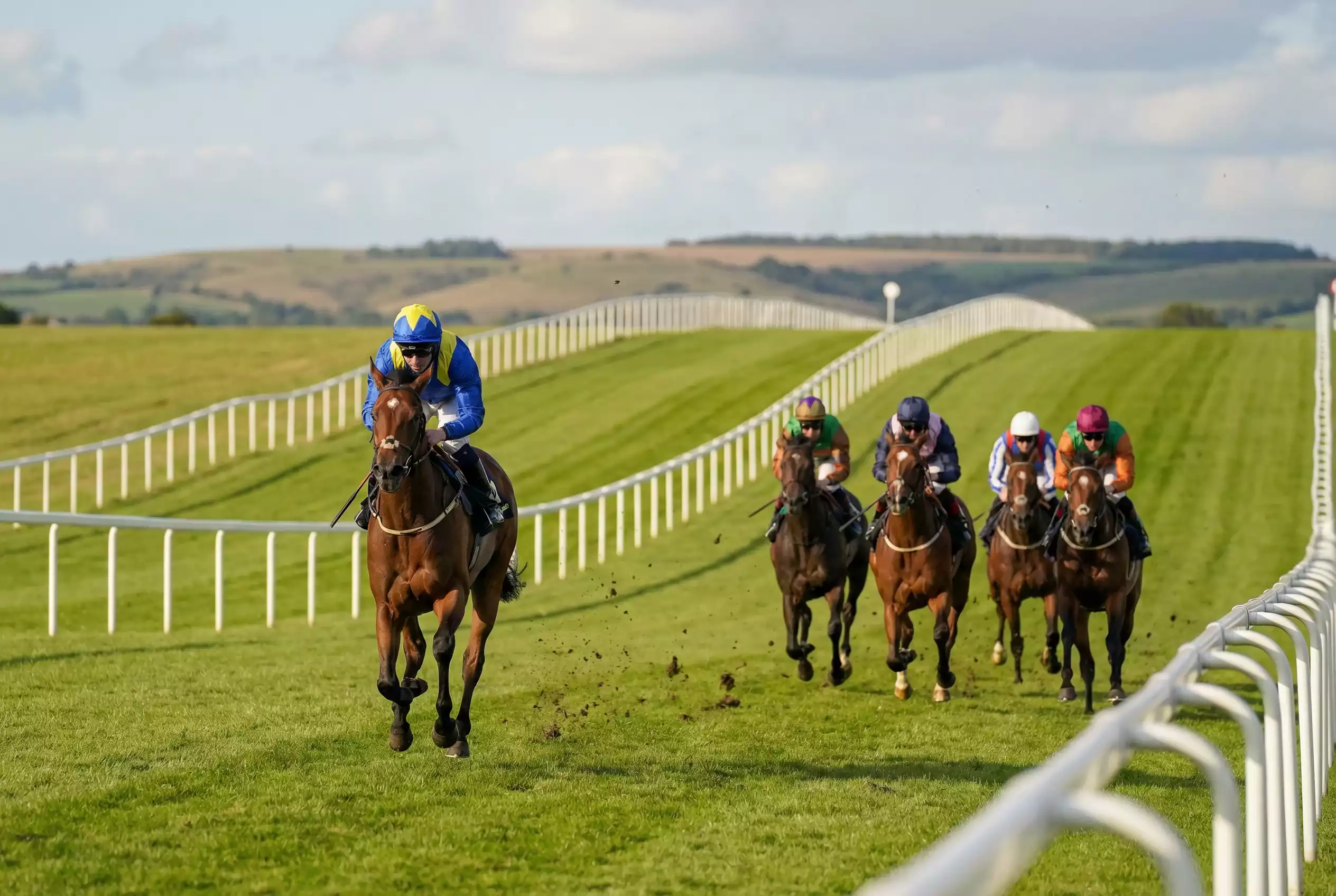
Speed at the Start or Speed at the Finish
Goodwood pace analysis is the missing layer in most punters’ approach to the festival. Draw bias gets discussed endlessly. Going conditions are scrutinised. Trainer and jockey form are debated on every racing forum. But pace — the question of whether a horse wins by dominating from the front or by finishing faster than everything else — is treated as an afterthought, if it is considered at all. That is a significant oversight, because at Goodwood the interaction between pace and the track’s unique layout decides more races than any single factor.
Speed at the start or speed at the finish — which wins here? The answer depends on the distance, the field size, the going, and the composition of the field itself. A five-furlong sprint with three confirmed front-runners and two closers is a fundamentally different race from a mile contest where nobody wants the lead. The pace scenario shapes everything: the position of each horse at the turn, the energy reserves available for the uphill finish, and ultimately which horse crosses the line first.
What makes pace analysis at Goodwood particularly rewarding is that the data exists to support it. Unlike many aspects of racing that rely on subjective judgement, pace can be measured through positional data, sectional times, and statistical models that track running styles across thousands of races. The tools are available. The question is whether you are willing to use them.
Pace Analysis at Goodwood — More on this topic at goodwood betting.
Front-Runner Advantage by Distance
At five furlongs, front-runners dominate. The downhill start accelerates the pace immediately, the race is over in under a minute, and the horse that establishes an early lead on the inside rail has a structural advantage that closers struggle to overturn. The finishing straight, although uphill, is not long enough to allow a significant change of position. A horse that is two lengths clear entering the final furlong at five furlongs will almost always hold on, because there are simply not enough metres left for the pursuer to close the gap.
At six furlongs, the front-runner advantage narrows. The additional furlong introduces enough time for closers to organise and pick up momentum, particularly in large-field handicaps where the pace is often strong and front-runners burn themselves out. In the Stewards’ Cup, for example, the sheer number of speed horses in a 28-runner field frequently produces a collapse in the final furlong, with hold-up horses finishing over the top of exhausted leaders.
Seven furlongs is the pivot point. Data from Geegeez.co.uk shows a measurable split in performance by running position at this distance: low stalls generate a Percentage of Rivals Beaten of 0.54, middle stalls 0.50, and high stalls 0.46. Those numbers reflect the draw’s influence, but pace overlays them. At seven furlongs, the bend and the long straight create a race that rewards horses positioned in the first three or four, but not necessarily on the lead. Stalkers — horses that sit just behind the pace and quicken in the straight — have the optimal profile at this trip.
At a mile and beyond, the balance shifts decisively towards hold-up horses. The uphill sections in the first half of the race penalise front-runners who set too strong a tempo, and the long finishing straight gives closers ample room to make their move. Front-runners can still win at a mile, but only if the pace is genuinely slow and no other horse challenges for the lead. In competitive Group races where multiple jockeys are happy to be positive, a front-runner’s chances diminish rapidly.
The High-Draw Front-Runner Exception
The conventional wisdom at Goodwood is that high draws are bad. At sprint distances, the data supports that view convincingly. But there is an important exception that most analysis overlooks: a horse drawn high that also has front-running speed can overcome the draw disadvantage by crossing to the rail early and establishing position before the field settles. Geegeez analysis of Goodwood races between 2016 and 2023 found that high-draw horses identified as front-runners had an Impact Value of 1.43 — meaning they won 43% more often than a random selection would predict.
That figure is remarkable because it contradicts the broad-brush narrative that high draws are a death sentence. What it tells us is that pace can override draw when a horse has sufficient tactical speed to negate the positional disadvantage in the first furlong. A horse drawn in stall fourteen that can cross to the rail in the first two furlongs is not racing from stall fourteen for the rest of the trip — it is racing from the rail, just like a horse drawn in stall one, but having used slightly more energy to get there.
The energy cost is the critical variable. Crossing from a high draw to the rail requires effort, and that effort reduces the reserves available for the finish. On firm ground, where the energy cost is lower because the surface offers less resistance, the trade-off is more favourable. On soft ground, where every stride through saturated turf drains the legs, the cost of crossing can be prohibitive. This means the high-draw front-runner angle is conditions-dependent: it works best on fast ground in fields of moderate size, and it is least effective on soft ground in full fields where the crossing distance is greater.
For punters, the practical application is straightforward. When you see a horse drawn high at five to seven furlongs, do not dismiss it automatically. Check its running style. If it is a confirmed front-runner with tactical speed, and the ground is good to firm, the draw disadvantage may be significantly smaller than the odds suggest. That gap between perceived disadvantage and actual probability is where value hides.
How to Identify Running Style Pre-Race
Identifying a horse’s running style before the race requires information from three sources, and none of them is complicated to access. The first is the form figures themselves. A horse whose recent results read 1-2-1 from three starts where it led at every call is a confirmed front-runner. A horse that typically starts slowly and finishes fast — moving from eighth to second in the closing stages — is a closer. The raw results do not always make this clear, so checking the in-running positions in detailed form databases is essential.
The second source is race replays. Watching a horse’s last two or three runs on video takes five minutes and tells you more about its running style than any set of numbers. Look for where the horse is positioned at the halfway point and how it travels through the field. Does it pull for its head and want to be in front? Does it settle at the back and save energy for a late burst? Replays reveal patterns that form figures alone cannot capture.
The third source is trainer tendencies. Some trainers consistently instruct their jockeys to be positive — to race prominently and take the initiative. Others prefer a patient approach, holding horses up and relying on finishing speed. Knowing a trainer’s habitual tactics tells you something about how their runners are likely to be ridden, even when the individual horse’s record is thin or ambiguous.
Sectional times, where available, add a quantitative layer to what is otherwise a qualitative exercise. Sectional data breaks a race into segments — typically the first half and the second half — and shows how fast each horse travelled through each phase. A horse with fast early sectionals and slow late sectionals is a speed horse that fades. One with slow early sectionals and fast late ones is a finisher. At Goodwood, where the gradients amplify the difference between early speed and late speed, sectional data is disproportionately valuable.
Integrating Pace into Selections
A pace map is the simplest tool for integrating pace analysis into your Goodwood betting. Before any race, list the runners and classify each as a front-runner, a stalker, a mid-division runner, or a closer based on the information gathered above. Then count the front-runners. If there are three or more confirmed pace-setters in a seven-furlong race, the pace is likely to be strong, which historically favours closers who can sit in behind and finish over the top. If there is only one natural front-runner, the pace may be slow, which favours that horse staying out of trouble on the lead.
See also Goodwood Betting Tips for Beginners.
The relationship between pace and draw adds a further dimension at Goodwood. In a sprint where three front-runners are drawn low and two closers are drawn high, the pace is going to be fierce on the inside rail, and the closers will struggle to get into the race. Reverse the draws — front-runners drawn high, closers drawn low — and the dynamics change entirely. The front-runners will spend energy crossing to the rail, potentially compromising their finishing speed, while the closers sit in the slipstream with a perfect position for the straight.
The final step is to ask a question that most punters skip: does the likely pace scenario favour or oppose my selection? If you are backing a closer in a race with no pace, you have a problem. If you are backing a front-runner in a race with four other speed horses, the pace will be suicidal and your horse is likely to fade. The best bets at Goodwood are those where the pace scenario actively supports the running style of your selection, giving it a tactical advantage before the stalls even open. Pace is not a guarantee of victory, but it is the factor that turns a good horse into a good bet.
