
 Available in US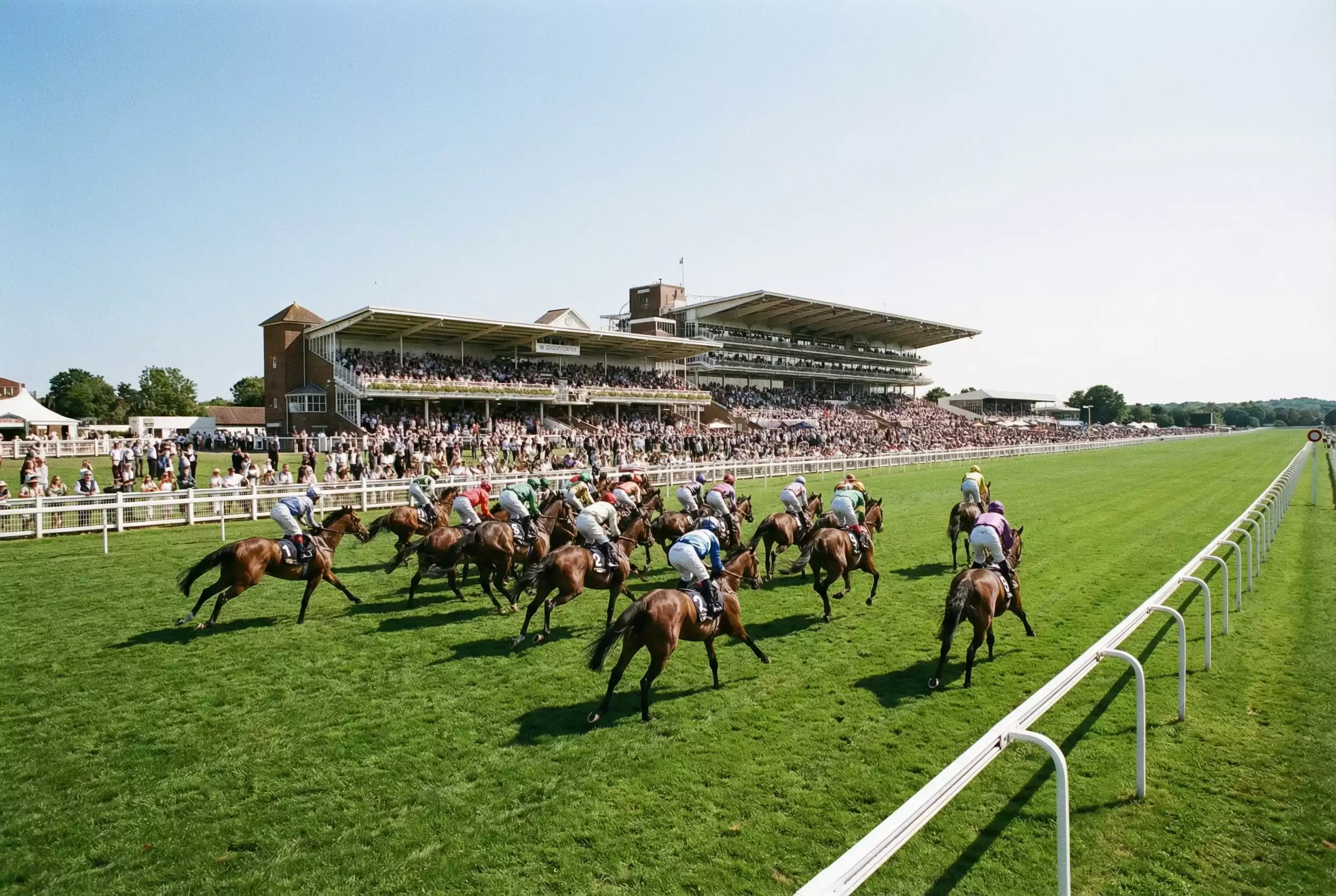
The Long Straight Levels the Draw
Goodwood mile races are the track’s signature distance and the stage for its most prestigious contest, the Sussex Stakes. The mile course combines a sweeping approach with one of the longest finishing straights in British racing, creating a test that rewards tactical intelligence, finishing speed, and the ability to handle Goodwood’s undulating terrain. For punters, the mile is where the long straight levels the draw — but not the form.
The relative neutrality of the draw at a mile is one of Goodwood’s distinctive features at this distance. Unlike the sprints, where stall position can determine the outcome before the race begins, mile races give every runner time to find a position regardless of where they start. That shifts the analytical emphasis from draw bias to form quality, running style, and ground preference — factors where the diligent punter can develop a genuine edge.
Goodwood Mile Races — More on this topic at goodwood betting.
Course Characteristics at One Mile
The mile start is positioned on the far side of the course, and the first two furlongs run slightly uphill before the track levels out. That uphill start naturally moderates the early pace, which is why mile races at Goodwood tend to develop into a tactical contest rather than a test of raw speed. Jockeys settle their horses through the opening stages, saving energy for the turn into the straight and the uphill finish.
Data from DrawBias.com confirms that there is no statistically significant draw bias at Goodwood over a mile. The long finishing straight — approximately three and a half furlongs — gives horses ample time to recover from an unfavourable position, and the uphill finish rewards stamina and acceleration rather than raw positional advantage. That does not mean the draw is entirely irrelevant: in small fields, a horse drawn wide can race freely without interference, while in larger fields the inside rail still offers the shortest route through the initial bend.
One stall position does stand out. OLBG data shows that stall two at a mile has generated an LSP of +152.15 over five years — the single most profitable stall-distance combination on the entire course. The reason is unclear from the data alone; it may reflect a statistical anomaly, or it may indicate that stall two offers the ideal balance between inside-rail proximity and room to manoeuvre at the start. For punters, it is worth noting as a tiebreaker when choosing between two otherwise equal selections, but not as a primary factor.
The uphill finish is the defining characteristic of the mile at Goodwood. Horses that possess a turn of foot — the ability to accelerate sharply in the final two furlongs — thrive on this track because the gradient saps the speed of horses already at full stretch. A horse that leads at the two-furlong pole is by no means assured of victory; the hill has a way of reversing the order in the closing stages, particularly when the going is on the quicker side and the pace has been genuine.
Key Mile Races
The Sussex Stakes is the crown jewel: a Group 1 worth £1,000,000 that attracts the best milers in Europe. Fields are typically small — six to nine runners — and the market is tight, with the favourite often trading at odds-on or close to evens. For punters, the Sussex is a conviction race: back your strongest opinion with a win-only stake, and accept the result without hedging.
The Lennox Stakes, a Group 2 on Tuesday, is a more accessible betting proposition. Fields are often larger — ten to fourteen runners — and the prices are more dispersed. The Lennox frequently attracts horses stepping down from Group 1 company and those stepping up from Group 3, creating a mix of form that can produce genuine value. The race is often overlooked by punters who are saving their analysis for the Sussex later in the week, which makes the market slightly less efficient and the value slightly more available.
The Vintage Stakes, a Group 2 for two-year-olds over seven furlongs that effectively races as a mile trial, reveals future talent. Winners of the Vintage frequently go on to compete in the following year’s Classics, and identifying those improvers early can inform not just your Goodwood bets but your autumn and spring betting too. The Celebration Mile in August, run outside the main festival, is another valuable mile event that uses the same course and produces comparable form.
Mile Form: What to Prioritise
Tactical speed — the ability to quicken rather than simply maintain a gallop — is the most important form attribute for Goodwood mile races. A horse that finishes strongly in every race, picking up lengths in the final furlong, is better suited to this track than one that leads throughout on a flat surface. The uphill finish at Goodwood specifically rewards acceleration, and horses that have demonstrated this ability in their recent runs deserve preference in your selections.
Going preference matters more at a mile than at sprint distances because the race is long enough for the surface to affect stamina. A miler that excels on good to firm ground has had its action tested on the type of surface Goodwood typically provides; a miler whose best form is on soft ground may find the firmer surface jarring over the full distance, particularly through the uphill finish where every stride demands more effort from the muscles.
Ascot-to-Goodwood form lines are the most reliable references for the Sussex Stakes and to a lesser extent the Lennox. The Queen Anne, the St James’s Palace, and the Royal Hunt Cup all produce runners that reappear at Goodwood, and their Ascot performance provides the freshest Group-level data available. Adjusting for the difference in track characteristics — flat at Ascot, undulating at Goodwood — is the key analytical step. A horse that won at Ascot by powering from the front may be vulnerable at Goodwood if the pace setup does not allow it to dictate terms.
Mile Betting Angles
The Sussex Stakes, with its small field and efficient market, offers limited value on most occasions. The consistent exception is when the favourite has a ground concern — a horse that needs good to firm but faces a changed going — or when an improving three-year-old arrives from a Classic campaign with unexposed potential. These scenarios create temporary mispricings that the market corrects slowly because the favourite’s reputation anchors the odds.
See also Goodwood Staying Races.
The Lennox Stakes and supporting mile handicaps are where the each way value concentrates. Larger fields, wider odds, and less analytical scrutiny from the betting public combine to produce pockets of value that would not survive in the Sussex market. A horse at 10/1 in the Lennox with proven Goodwood form and a suitable going forecast is a stronger each way proposition than a 3/1 shot in the Sussex, because the place terms are more generous and the form is less comprehensively analysed by the market.
Across all mile races at Goodwood, one principle holds: the horse that can quicken on the hill wins. If your selection has demonstrated a turn of foot in its last two or three runs — gaining lengths in the final furlong regardless of the track — it has the physical attribute that Goodwood’s mile course rewards above all others. Build your selections around that quality, and the rest of the analysis becomes refinement rather than guesswork.
