 Available in US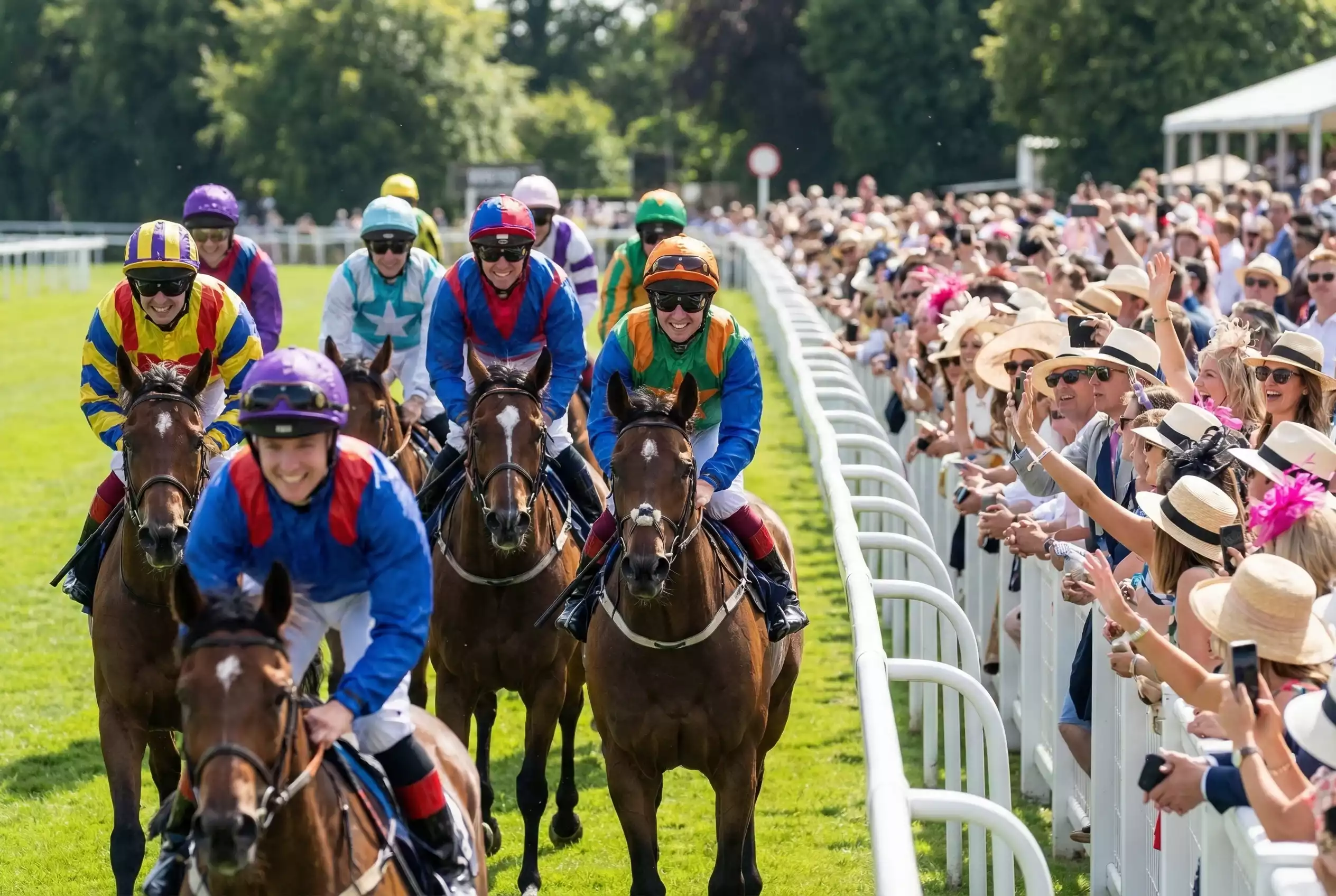
Where Courage Meets Charity on the Sussex Downs
The Magnolia Cup Goodwood is one of the most distinctive events in British racing — a charity race for amateur female riders that turns Saturday’s card into something quite unlike any other day at the festival. Amid the 37 professional races spread across five days of intense competition, the Magnolia Cup stands apart as a reminder that Goodwood has always been about more than just form and odds. Where courage meets charity on the Sussex Downs, the atmosphere shifts from analytical to celebratory, and the crowd responds in kind.
The race is run over approximately one mile on Saturday afternoon, slotted between the professional events on the card. The riders are women from various backgrounds — business leaders, television personalities, sportswomen, and philanthropists — who commit months of training and fundraising for the chance to race at one of the most famous racecourses in the world. The combination of genuine danger, high-profile participants, and a serious charitable purpose makes the Magnolia Cup one of Saturday’s most anticipated moments, even for punters whose primary focus is the Stewards’ Cup.
Magnolia Cup & Charity Races at Goodwood — More on this topic at goodwood betting.
History and Purpose
The Magnolia Cup was established to raise money for charitable causes, with the specific partner charity varying over the years. The race has grown from a modest addition to the Saturday card into a significant fundraising vehicle, generating substantial sums through sponsorship, rider pledges, and public donations. The charitable ethos is central to the event’s identity: every rider participates not for personal gain but to support a cause larger than themselves, and that distinction gives the Magnolia Cup an emotional weight that professional racing, for all its excellence, does not always achieve.
King’s Trust International has been the primary charity partner in recent years, and the relationship has proven mutually beneficial. The race provides the charity with a high-profile fundraising platform at one of Britain’s most glamorous sporting events, while the charity gives the race a purpose that resonates with Goodwood’s broader commitment to community and social responsibility. The riders serve as ambassadors for the cause, and the fundraising that surrounds the race extends well beyond the day itself — with sponsor pledges, auction events, and media coverage all contributing to the total raised.
The growth of the Magnolia Cup reflects a broader trend in British sport towards using competitive events as vehicles for philanthropy. What began as a novel addition to the Goodwood card has become an established tradition with its own momentum, its own following, and its own records. The race has inspired similar charity events at other racecourses, but none has matched the Magnolia Cup’s combination of setting, prestige, and fundraising success. Goodwood’s unique atmosphere — the Downs, the festival energy, the mix of serious racing and social celebration — gives the Magnolia Cup a stage that amplifies every aspect of the event.
Record-Breaking 2025
The 2025 Magnolia Cup raised a record £834,170 for King’s Trust International, surpassing the previous year’s total by a significant margin. That figure — generated by a single race on a single afternoon — underlines the fundraising power of an event that combines celebrity participation, corporate sponsorship, and the emotional pull of live sport at a prestigious venue.
The money raised funds King’s Trust International’s programmes supporting young people into education, employment, and enterprise. For the riders who trained for months and risked genuine physical danger to compete, the record total was the ultimate validation of their effort. For the crowd watching from the enclosures and the betting ring, it was a moment of collective goodwill that briefly transcended the competitive instincts that drive the rest of the festival.
The £834,170 total did not arrive by accident. It reflects a professional fundraising operation that begins months before the race, with each rider committing to a personal fundraising target and leveraging their networks to meet it. Corporate sponsors contribute to the pot, and Goodwood itself supports the effort with promotional activity across its channels. The result is a sum that would be impressive for a dedicated charity gala and is extraordinary for a horse race lasting approximately two minutes.
The Race Experience
The riders begin their preparation months before the festival. Training takes place at approved racing yards, where amateur participants learn the fundamentals of race riding — how to sit, how to balance, how to communicate with the horse through their hands and body position. For women with no previous riding experience, the learning curve is steep. For those who ride recreationally, the transition from hacking to race-speed galloping is a physical and psychological challenge of a different order.
The training programme is not cosmetic. Riders are expected to reach a standard of competence that allows them to race safely alongside other horses at competitive speed on one of Britain’s most demanding tracks. The undulations, the camber, and the uphill finish that test professional jockeys in every race are equally present for the Magnolia Cup participants, with the additional complication that amateur riders have less experience managing a horse under the pressure of a live race.
On race day, the atmosphere around the Magnolia Cup is distinctly different from the professional races. The parade ring is louder, the crowd more vocal, and the emotional investment from the riders’ friends, families, and sponsors is palpable. The race itself is run at a genuine gallop — these are thoroughbred racehorses, and they do not slow down for amateur jockeys — and the margin between exhilaration and fear is measured in heartbeats rather than lengths. The finish, whether the crowd is cheering a winner or simply celebrating that every rider returned safely, is invariably one of Saturday’s most memorable moments.
Can You Bet on the Magnolia Cup?
Betting is available on the Magnolia Cup, but it comes with a significant caveat: the form data that underpins professional race betting simply does not exist for amateur charity races. The riders have no public form record, the horses are allocated rather than selected by the riders, and the training history of each participant is not publicly documented. In practical terms, you are betting blind — or at least with dramatically less information than in any other race on the card.
See also Flat Racing Calendar.
On-course bookmakers will offer prices, and the odds tend to reflect a mix of name recognition, perceived riding ability based on the rider’s background, and the quality of the allocated horse. The market is thin, the prices are volatile, and the outcome is genuinely unpredictable. None of this makes it a bad bet — it makes it a different kind of bet, one that belongs in the category of entertainment rather than strategy.
If you choose to bet on the Magnolia Cup, treat it as you would a novelty wager: small stakes, no analytical expectations, and an acceptance that the result is as likely to surprise as to conform to any prediction. The money you risk is part of the fun, not part of your serious festival bankroll. And if your selection wins, the joy of landing a bet on a race that raises hundreds of thousands of pounds for charity is a different and arguably richer pleasure than any professional-race winner can deliver.
