 Available in US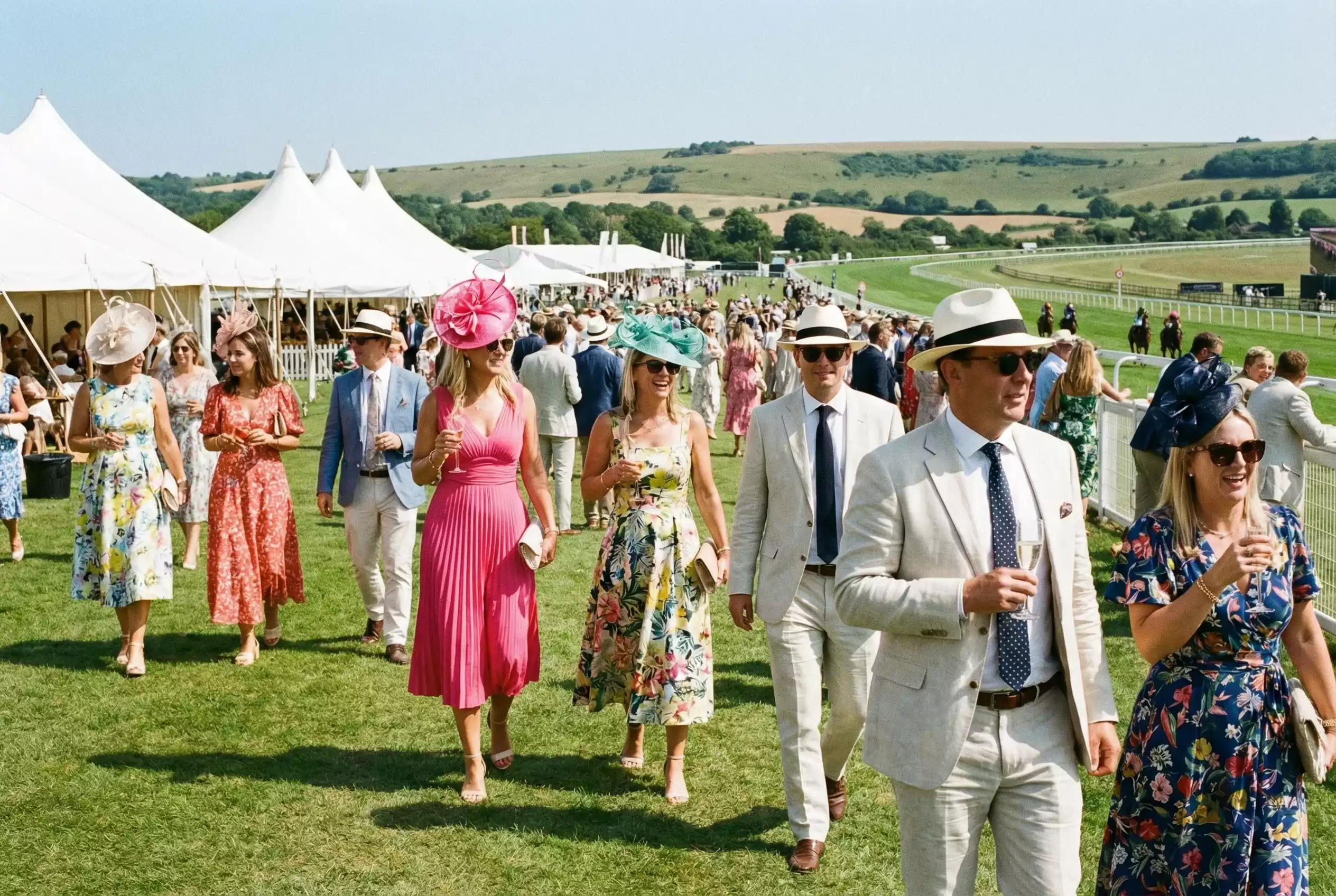
Dress the Part, Plan the Day, Enjoy the Races
Goodwood dress code enclosures are part of what makes the festival feel different from an ordinary day at the races. The Qatar Goodwood Festival is a social occasion as much as a sporting one, and the three main enclosures — each with a distinct atmosphere, price point, and dress requirement — give visitors the chance to tailor their experience to match their expectations. Whether you want the full top-hat formality of the Richmond Enclosure or the relaxed feel of the Lennox, planning ahead is the difference between a seamless day and one spent arguing with a gate steward about your shoes.
With research suggesting that around 68% of ticket buyers at UK racecourses are casual or first-time visitors, the majority of people at Goodwood on any given day are still learning the conventions. There is no shame in not knowing the rules — and there is nothing complicated about following them once you do. Even the jockeys who ride here regularly speak about how much they look forward to the festival. One featured rider at the meeting has described Goodwood as a unique track with a beautiful setting that makes it a meeting they always anticipate with genuine excitement. That sense of occasion extends beyond the racing itself, and getting the practicalities right — what to wear, where to go, how to get there — is the first step towards sharing in it.
Goodwood Dress Code & Enclosures — More on this topic at goodwood betting.
Enclosure Tiers and What You Get
The Richmond Enclosure is Goodwood’s premium tier. It offers the closest views of the parade ring, the best sightlines to the finishing post, and access to the Owners and Trainers area where you can rub shoulders with connections if the mood takes you. The facilities — bars, restaurants, seating — are the most polished on the course, and the atmosphere blends racing seriousness with social elegance. Ticket prices are the highest of the three enclosures, typically ranging from £50 to £90 per day depending on which day of the festival you choose, with Saturday commanding the premium.
The Gordon Enclosure occupies the middle ground. It offers good viewing, comfortable facilities, and a less formal atmosphere than the Richmond. For most punters who want to enjoy quality racing without the expense or the strictest dress requirements, the Gordon is the best balance of value and experience. Prices typically sit between £25 and £50 per day.
The Lennox Enclosure is the most accessible: the lowest prices, the most relaxed dress code, and a family-friendly atmosphere that makes it ideal for first-time visitors or those bringing children. The viewing is further from the finish line than in the Richmond or Gordon, but the big screens and the buzzing atmosphere compensate. Prices start from around £15 to £25, making it a genuine budget option for a day at one of Britain’s premier racecourses.
Across all three enclosures, Goodwood operates as a cashless venue. No banknotes are accepted at bars, restaurants, or official betting outlets. Debit cards and contactless payments are the standard. Some independent on-course bookmakers still accept cash, but the safest assumption is that you will need a card or a funded betting app to place your bets. Arrive prepared.
Dress Code Rules
The Richmond Enclosure has the strictest dress code. For men, a jacket and tie are required, with trousers — no jeans, no shorts, no trainers. For women, smart attire is expected: dresses, jumpsuits, or tailored separates, with hats or fascinators encouraged though not mandatory. The dress code is enforced at the gate, and racegoers who do not meet the standard can be refused entry or redirected to a different enclosure. The most common rejections are for trainers, casual shoes, and the absence of a jacket on male visitors.
The Gordon Enclosure requires smart casual. This gives considerably more flexibility: open-necked shirts are acceptable for men, and the range of acceptable footwear is broader. The key is to avoid anything that reads as overtly casual — flip-flops, beachwear, sportswear with visible logos — and to aim for an outfit you would wear to a smart restaurant rather than a barbecue.
The Lennox Enclosure has no formal dress code, though Goodwood reserves the right to refuse entry to anyone whose attire is deemed offensive or inappropriate. In practice, the Lennox attracts a mix of styles from sundresses and smart shorts to more traditional racewear. It is the enclosure where comfort and the weather forecast take priority over formality.
Practical tips that save stress on the day: check the weather forecast and plan for both sun and rain — Goodwood’s hilltop location means conditions can change within the hour, and a soaked linen jacket is nobody’s idea of a good time. Bring layers. Wear shoes you can walk in comfortably across grass and gravel. And if in doubt about whether your outfit meets the Richmond standard, it probably does not — either upgrade or choose the Gordon instead.
Getting There: Transport and Parking
Goodwood Racecourse sits on the South Downs above Chichester in West Sussex, approximately two hours from central London by car and ninety minutes by train. The nearest railway station is Chichester, from which a shuttle bus service runs directly to the racecourse throughout the festival. The shuttle operates frequently on all five days, with the last buses timed to depart after the final race.
Driving is the most common option, and Goodwood provides substantial on-site parking — but the approach roads are narrow, and on busy days, particularly Saturday, congestion can add thirty minutes or more to your journey. Arriving early is the simplest mitigation: gates typically open two hours before the first race, and those who arrive close to the opening time park quickly, settle in, and have time to study the card before the action begins. Those who arrive thirty minutes before the first race often find themselves watching the opening event from the car park queue.
Coach services operate from several cities during the festival, offering an all-inclusive package that removes the driving and parking headaches entirely. These are worth considering for groups, particularly if the plan involves drinking — which at a five-day summer festival is not an unreasonable assumption. Designated drivers at Goodwood are heroes, but they are also rare.
If you are staying overnight in the area, Chichester offers the widest range of accommodation, from hotels to bed-and-breakfasts. Book early: the festival fills the local hotels months in advance, and late availability tends to be expensive and distant. Some racegoers stay in Brighton or Portsmouth and commute, which is viable but adds to the journey time and limits your flexibility at the end of the day.
Raceday Timeline
Gates open approximately two hours before the first race, which is usually scheduled for 1:10pm or 1:50pm depending on the day. The first race on Wednesday — Sussex Stakes Day — tends to go off slightly later than Tuesday’s opener, reflecting the heavier card. Seven races are run each day, with approximately thirty to thirty-five minutes between each race. The final event is typically around 5:35pm, after which the enclosures remain open for approximately an hour.
See also Responsible Gambling at Goodwood.
Arriving at least an hour before the first race gives you time to park, clear the entrance, collect any pre-ordered badges, and walk the course-side facilities before the card begins. It also allows you to check the going report on the big screens, visit the parade ring for the first race, and place any early bets at morning prices before the on-course market sharpens.
The interval between races is your working window. Use it to review the next race’s racecard, check for any non-runners or going changes, and — if you are in the enclosure — visit the parade ring to see the horses in person. Some punters swear by the parade ring as a source of information: a horse that looks calm, well-muscled, and in good coat is at least not sending negative signals. A horse that is sweating, jittery, or reluctant to enter the ring might be one to oppose, regardless of what the form says.
After the last race, allow time for the exit. Saturday is the worst day for traffic, with the largest crowds all heading for the same narrow roads simultaneously. If you are in no hurry, staying for thirty minutes after the final race — enjoying a drink, reviewing the day, planning tomorrow’s selections — lets the worst of the traffic clear before you reach the car park. A calm exit after a good day at the races is a better memory than a frustrating hour in a queue.
