
 Available in US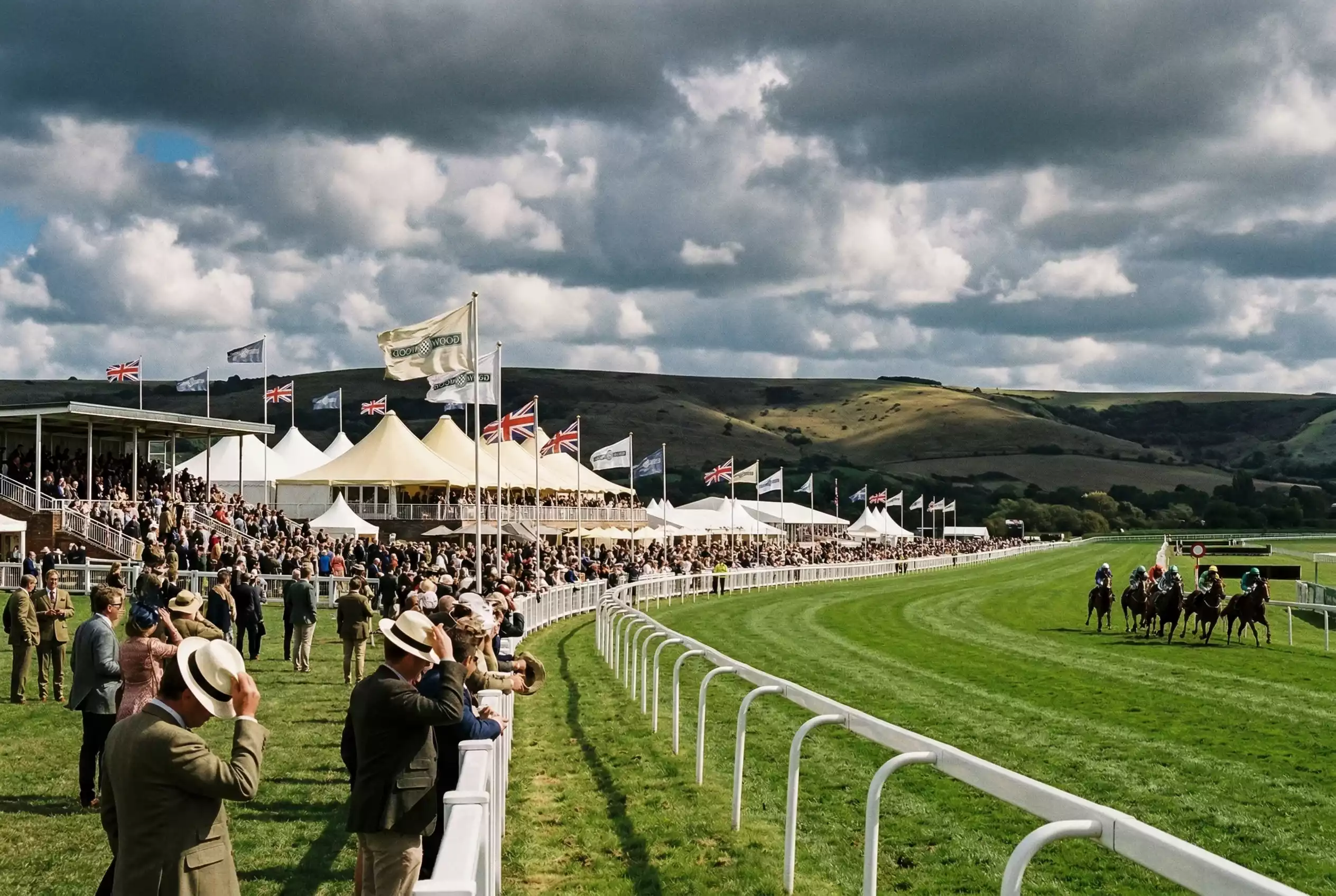
500 Feet Up and Wide Open
Goodwood weather racing impact is one of the most underestimated factors at the festival. The racecourse sits approximately 500 feet above sea level on the exposed ridge of the Sussex Downs, with nothing between it and the English Channel but a few miles of farmland. That elevation and exposure make Goodwood one of the most weather-sensitive tracks in the country. Wind, rain, and temperature do not just affect comfort — they directly influence race results, and the punter who adjusts for them has an edge over the one who does not.
Most racecourses in Britain are sheltered, low-lying venues where weather conditions are relatively stable during a race meeting. Goodwood is the opposite. A clear, warm morning can give way to a stiff south-westerly breeze by afternoon, changing the character of the racing between the first and last events on the card. A rain shower that passes over Chichester without consequence can dump enough water on the Downs to shift the going from good to firm to good within an hour. Wind is the invisible jockey at Goodwood, and understanding its influence is worth more than any individual form stat.
Weather & Wind at Goodwood — More on this topic at goodwood betting.
Wind Direction and Its Effect on Pace
The prevailing wind at Goodwood comes from the south-west, blowing across the Downs from the direction of the coast. When this wind meets the home straight, which runs roughly north to south, it creates a headwind for horses finishing their race. The effect on pace is measurable: front-runners labouring into a headwind in the final two furlongs are at a greater disadvantage than on a calm day, because the wind adds to the physical effort of maintaining speed while climbing the uphill finish.
Goodwood’s five-furlong course is one of the fastest in the country on calm days, but a headwind in the final furlong can slow finishing times by a second or more. That difference is enormous in sprint racing, where the margins between first and fifth are measured in fractions of a second. A horse with a proven ability to sustain speed into a headwind — typically a strong, powerful type rather than a lightweight speedster — gains a significant advantage on windy days.
A tailwind reverses the dynamics. When the wind blows from the north — less common but not unusual — it pushes horses through the final furlongs, producing quicker finishing times and favouring speed horses that can exploit the assistance. Closers benefit less from a tailwind than you might expect, because the tailwind also helps the horses in front maintain their advantage. In tailwind conditions, the pace is genuine throughout, and the race is more likely to be won by a horse that has been prominent from the start.
Crosswinds present a different challenge. A strong crosswind can push horses off their intended line, particularly through the turn into the home straight where the course is most exposed. Horses drawn on the sheltered side of the field — typically the side closest to the stands — can gain a subtle advantage because they are less affected by the lateral push. Checking the wind direction relative to the starting stalls before a sprint is a small analytical step that can inform your draw assessment.
Rain, Temperature and Going Changes
Goodwood sits on chalk downland, which has a profound effect on how the course handles rain. Chalk drains exceptionally well, which means that a brief summer shower can pass through the ground quickly and leave the surface firmer than you might expect. Conversely, prolonged rain over several days saturates even chalk, and when Goodwood does ride soft it tends to be genuinely testing because the undulations amplify the energy cost of racing on yielding ground.
Seamus Buckley, Goodwood’s clerk of the course, has described the ideal flat racing conditions as good to firm with a little moisture and a grass length of around four inches — a description reported in Racing Post that captures the precise balance Goodwood aims for during the festival. That target tells you something important: the track management team actively works to produce ground that is fast enough for sprinters but has just enough give to prevent jarring. When summer temperatures push above 25 degrees for several consecutive days, the ground can become faster than the ideal, favouring speed horses and amplifying draw advantages at shorter distances.
Temperature also affects the horses directly. Hot days increase the risk of dehydration and overheating, particularly for horses running in the later races after standing in the pre-parade ring. Stayers running over two miles on a hot afternoon face a greater physical challenge than on a cooler day, which can narrow the gap between the best horse and its rivals. When the temperature forecast for a festival day exceeds 28 degrees, consider adjusting your staying-race selections towards horses with known heat tolerance and away from those that have struggled on firm, fast ground in the past.
Where to Check Conditions on Race Morning
The official going report is published by the clerk of the course and updated throughout the day. It is available on the Goodwood website, on Racing Post, and on most major betting apps. The first report is issued on the morning of racing, typically by 8am, and subsequent updates follow after the course has been walked and — on some occasions — after early races have been run. Always check the latest update rather than relying on the morning report, because conditions can change over the course of the afternoon.
The GoingStick is a mechanical device used by the clerk of the course to provide an objective measurement of ground conditions. The reading is expressed as a number: lower numbers indicate softer ground, higher numbers indicate firmer. GoingStick readings are published alongside the official going description and give you a more precise picture than the verbal categories alone. A going description of “good to firm” covers a range of actual firmness, and the GoingStick reading tells you where within that range the course sits.
For wind conditions, the Met Office website provides hourly forecasts for the Goodwood area, including wind speed and direction. Cross-referencing the forecast with the race times tells you whether the wind will be a headwind, tailwind, or crosswind in the home straight for each race. This information is freely available and takes less than a minute to check, yet the majority of punters never consult it. That asymmetry — valuable information that most people ignore — is precisely the kind of edge that compounds into profit over a festival.
Adjusting Bets for Weather
When the wind is blowing from the south at more than fifteen miles per hour, reduce your confidence in front-runners at five and six furlongs. The headwind in the final furlong disproportionately penalises horses leading the race, because they absorb the full force of the wind without shelter from the field behind them. Closers, sitting in the slipstream of the runners ahead, expend less energy fighting the wind and arrive at the finish with more in reserve. On windy sprint days, the draw becomes slightly less decisive and running style becomes more important.
See also Goodwood Racecourse History.
When rain arrives unexpectedly — or when the going has softened beyond what was forecast — reassess any selections that rely heavily on draw advantage. Draw bias at Goodwood is most pronounced on fast ground. On softer ground, the camber’s effect is diluted because the surface offers more grip, and horses drawn wide can travel more comfortably. If your bet was based on a draw advantage that only exists on firm ground, and the going has changed, the foundations of your selection may have shifted.
On hot days, favour horses drawn on the shaded side of the course during the parade and running. Heat stress is a real factor at an exposed venue like Goodwood, and horses that have been standing in direct sun for thirty minutes before the race can lose an edge that is invisible on the racecard but visible in the final furlong. Trainers who know Goodwood will manage their horse’s exposure, but not all of them do.
The overarching principle is simple: weather conditions at Goodwood are a variable that changes the probability of each outcome, and any change in probability should be reflected in your betting. If your pre-race analysis was conducted on Monday morning and the weather has shifted by Wednesday afternoon, your analysis needs updating. The punter who treats the weather as an active factor, not static background, will consistently find better-priced selections than the one who assumes conditions are fixed.
