
 Available in US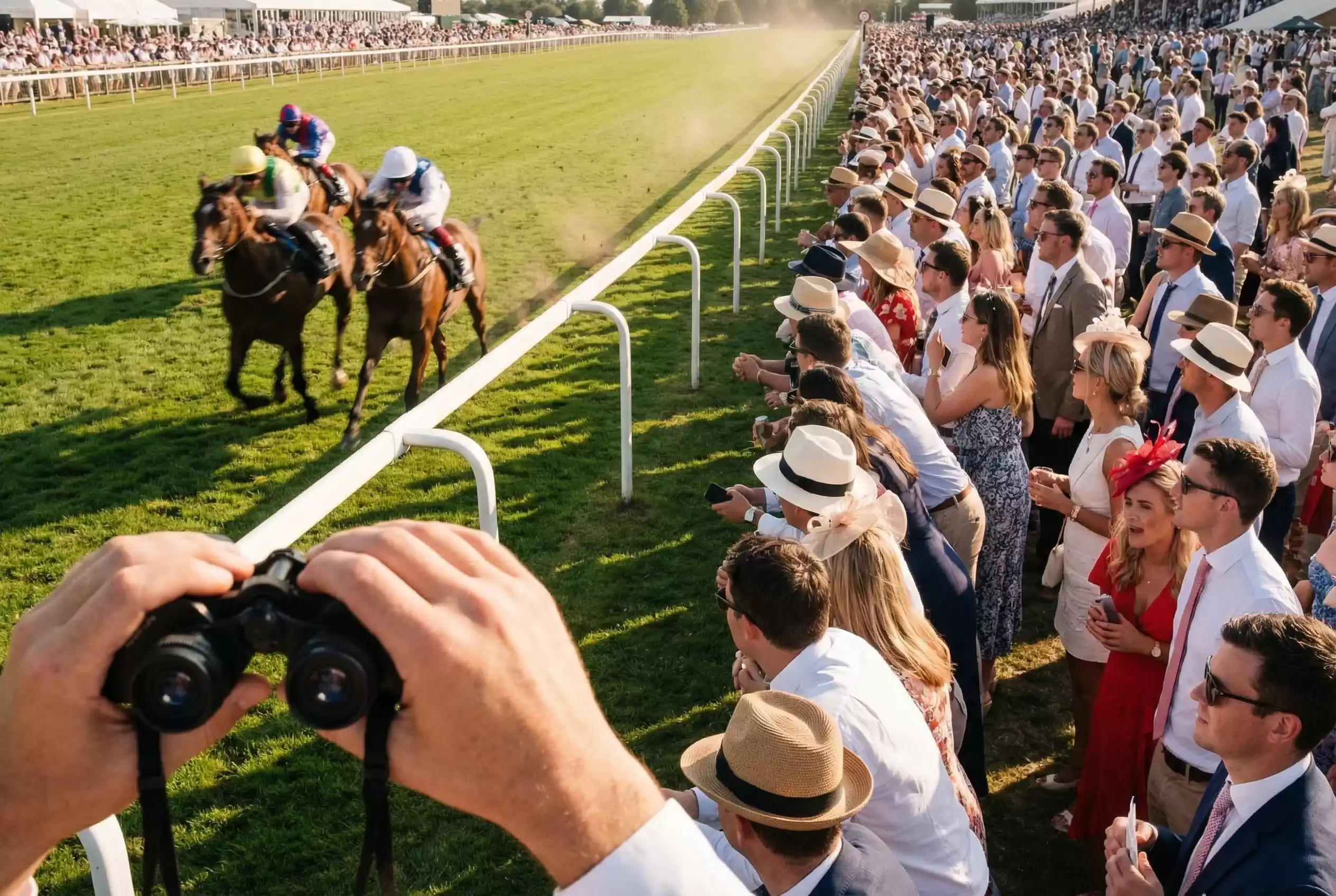
In-Play Is a Different Game
Live betting Goodwood races is a fundamentally different activity from placing a bet before the off. In-play betting — wagering on a race while it is being run — happens primarily on betting exchanges, though some bookmaker apps now offer limited in-running markets. The odds change in real time as the field moves around the course, reflecting the shifting probabilities of each horse’s chance of winning. It is fast, volatile, and unforgiving of hesitation.
In-play is a different game — know the rules before you enter. The mechanics differ from pre-race betting in ways that affect both the opportunities and the risks. The information you are acting on is visual rather than analytical: you are reading the race as it unfolds, interpreting positions, pace, and momentum in real time. That visual skill can be developed, but it requires practice and an understanding of how Goodwood’s specific track characteristics create patterns that repeat from race to race.
This is not a guide that will encourage you to dive into in-play betting without preparation. The risks are real, the speed of loss is high, and the latency issues at a live sporting event create structural disadvantages for most punters. But for those who understand the mechanics and have the discipline to use them selectively, in-play markets at Goodwood offer a narrow set of opportunities that are not available before the race starts.
Live Betting at Goodwood — More on this topic at goodwood betting.
How In-Play Horse Racing Markets Work
On a betting exchange like Betfair, in-play markets operate continuously from the moment the stalls open until the horses cross the line. The odds on each runner are recalculated with every stride, based on the money being matched by bettors who are watching the race. A horse that breaks well and leads after two furlongs will see its odds shorten rapidly, while a horse that stumbles at the start or is caught wide will drift to longer prices almost immediately.
The key difference from pre-race betting is that there is no fixed price. Every bet you place in-play is matched against another bettor at the prevailing odds, and those odds can move dramatically within a single second. Placing a bet at 3.0 and seeing the odds move to 2.5 before your bet is matched means you either get the original price or your bet goes unmatched. On a busy exchange, this slippage is a constant factor, and it is almost always in the direction that disadvantages the bettor reacting to events rather than anticipating them.
Some bookmaker apps offer in-play fixed-odds markets, but these are typically suspended during the race and only reopened at specific points — for example, as the field turns into the home straight. The prices offered in these windows are conservative because the bookmaker has the advantage of seeing the race develop before setting the odds. Exchange in-play is more dynamic but more demanding; bookmaker in-play is simpler but the value is usually thinner.
The volume of money traded in-play on major Goodwood races can be substantial. The Sussex Stakes and the Stewards’ Cup both generate large in-play pools, which means the market is liquid enough for bets to be matched quickly. Smaller races on the undercard have thinner in-play markets, which makes it harder to get matched at the price you want and easier to be caught by a sudden price swing.
What to Watch for at Goodwood
Goodwood’s course characteristics create specific in-play patterns that recur across the festival. At five furlongs, the draw effect is visible within the first two furlongs: horses breaking from low stalls that establish rail position immediately trade at shorter in-play prices, while those drawn high and racing wide drift rapidly. BritishRacecourses.org data shows that stall one at five furlongs produces twice as many winners as any other individual position, and in-play markets reflect this structural advantage from the moment the stalls open.
The high-draw front-runner exception is relevant here too. Geegeez analysis found that high-draw horses identified as front-runners had an Impact Value of 1.43, meaning they overcame the draw disadvantage through tactical speed. In-play, this manifests as a horse drawn wide that crosses to the rail within the first furlong — its odds will initially drift on the break, but if it successfully reaches the rail, the price will contract sharply. Recognising this pattern live, before the market fully adjusts, is one of the few genuine in-play edges available at sprint distances.
At longer distances, the undulations create a different dynamic. Horses that look comfortable through the first mile of a two-mile race may be masking effort that will tell in the final two furlongs. The descent into the home straight is the critical in-play moment for staying races: a horse that loses its action or stumbles on the downhill section will see its odds lengthen immediately, sometimes offering a lay opportunity for the alert exchange user. Conversely, a horse that travels smoothly through the turn and picks up without being asked is signalling reserves that the market may not yet have priced in.
Risks of In-Play Betting
Latency is the single biggest risk in-play. If you are watching the race on a live stream through your betting app, the images you see are delayed by one to three seconds compared to the live action at the course. On an exchange, the bettors with the fastest connection — often those at the course or using low-latency data feeds — see events before you do and act before you can react. By the time your screen shows a horse taking the lead, the exchange odds may already have adjusted. You are trading on information that is structurally out of date.
The speed of loss in-play is dramatically faster than in pre-race betting. A pre-race bet can only lose when the race ends. An in-play bet can lose within seconds if the horse you backed is immediately hampered, outpaced, or pulled up. The psychological impact of instant loss, combined with the temptation to chase immediately by placing another in-play bet, creates a feedback loop that can deplete a bankroll faster than any other form of betting.
Emotional decision-making is amplified in-play. The adrenaline of watching a race live, combined with the pressure of real-time odds movement, overrides the analytical thinking that you applied before the race. Decisions that would never survive calm, pre-race scrutiny — backing a horse because it happens to be leading at halfway, or laying the favourite because it was slow out of the stalls — can feel rational in the heat of the moment but are often reactive rather than informed.
The practical response to these risks is restraint. If you engage with in-play markets at Goodwood, do so with a predefined plan: one or two scenarios that you have identified before the race, with specific triggers and price levels. If the scenario does not materialise, do not improvise. Close the app and wait for the next race. Unplanned in-play betting is the fastest way to lose money at any race meeting.
When In-Play Can Add Value
The clearest in-play value at Goodwood exists in laying false leaders at sprint distances. At five and six furlongs, horses drawn high that break fast and lead early often trade at very short in-play prices — sometimes as low as 2.0 — despite facing a structural disadvantage. The market overreacts to the visual of a horse leading the field, without adequately pricing the fact that the camber, the draw, and the closing speed of inside-rail runners will likely tell in the final furlong. Laying these false leaders at their shortest in-play price, before the field enters the final two furlongs, has been a profitable in-play strategy over multiple Goodwood festivals.
See also Goodwood Dress Code & Enclosures.
In staying races, the in-play value comes from backing closers when the pace collapses. If the first mile of a two-mile race has been run slowly and the field is bunched, the in-play odds will compress around the leaders. But when the pace increases sharply entering the final three furlongs, closers that have been travelling well in rear suddenly have a tactical advantage that the compressed in-play odds do not reflect. Backing a closer at the moment the pace lifts — when the leaders start to weaken but before the exchange has fully repriced — is the staying-race equivalent of the sprint lay.
Both strategies require predefined scenarios, real-time attention, and the willingness to let the race pass without acting if the trigger does not materialise. In-play betting at Goodwood is not about continuous engagement with the market. It is about waiting for one specific moment when the odds do not reflect the reality of the race, and acting decisively when that moment arrives.
