
 Available in US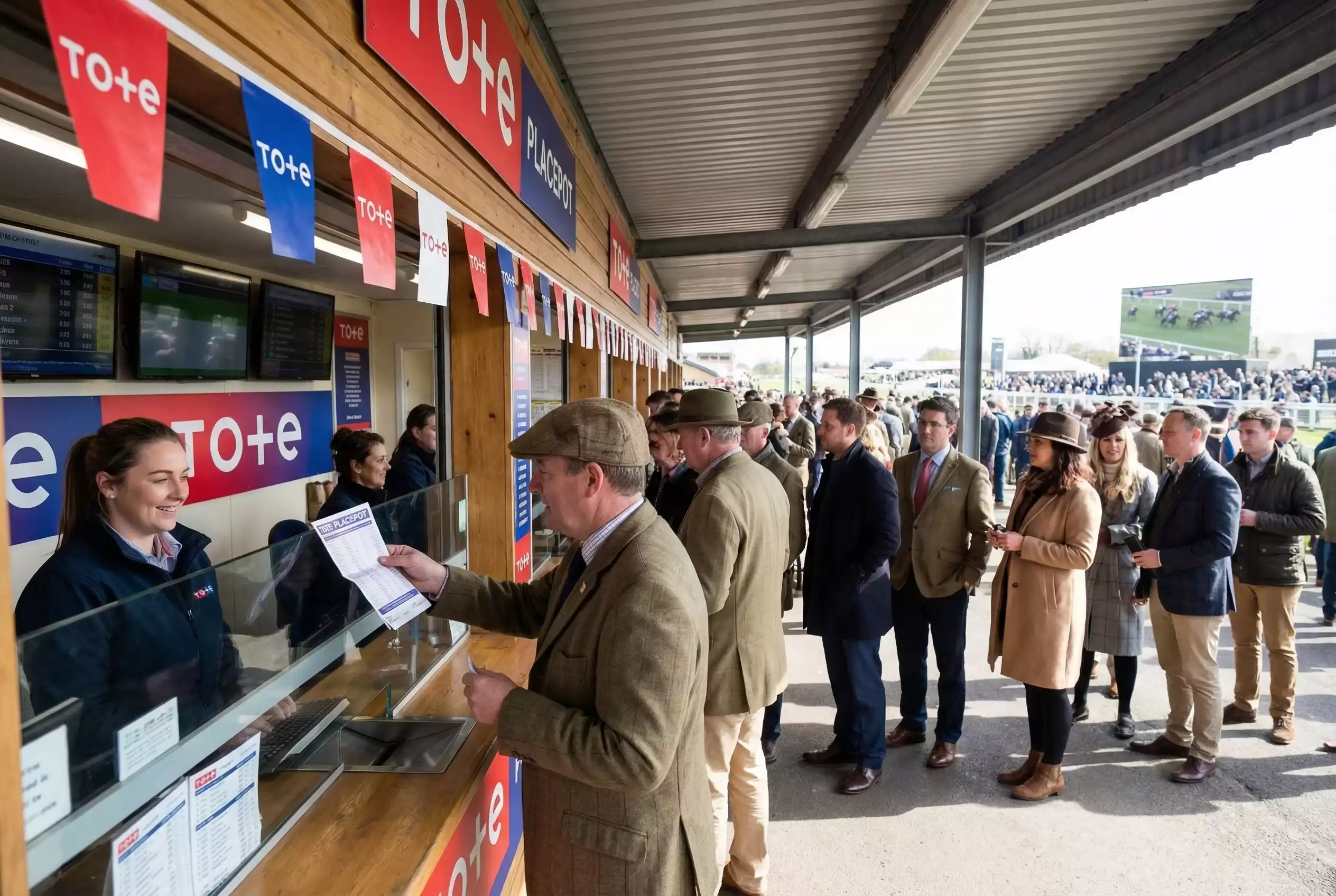
Pool Bets Turn Small Stakes into Festival-Sized Payouts
Goodwood tote betting offers a fundamentally different experience from fixed-odds wagering, and during the festival it comes into its own. Pool bets — also known as pari-mutuel bets — work by collecting all stakes into a single pool and dividing the total among the winners after the operator takes a percentage. There are no fixed odds, no locked-in prices, and no bookmaker margin in the traditional sense. The payout depends on how many other people backed the same outcome as you, which means the returns can be significantly higher than fixed odds when you find a result that the majority of the pool missed.
The Qatar Goodwood Festival, with its 37 races across five days, generates some of the largest Tote pools of the British flat season. The combination of big fields, high-profile races, and large crowds ensures that the pools are deep enough to produce meaningful dividends without being so thin that a single large bet distorts the returns. For punters who enjoy multi-race bets at small stakes, pool betting at Goodwood is as good as it gets.
Goodwood Tote & Pool Betting — More on this topic at goodwood betting.
Placepot: The Festival Favourite
The Placepot is the single most popular pool bet at British racecourses and for good reason. To win, you need to find a horse that finishes in the places — typically the first two, three, or four depending on field size — in each of the first six races on the card. You do not need to find the winner. You need to find placed horses, which is a considerably easier task, and the payouts can be substantial when one or more races produce a surprise result that eliminates the majority of the pool.
The mechanics are straightforward. You select one or more horses in each of the six qualifying races. If at least one of your selections places in every race, you collect a share of the pool. The more horses you select in each race, the more permutations your bet contains and the higher the cost. A simple Placepot with one horse in each race is a single £1 bet — six legs, six selections, one unit. Add a second selection in two of the six races and you have four permutations at £1 each — a £4 total cost.
The strategy that works best at Goodwood is to identify the races where finding a placed horse is most uncertain and use two or three selections in those legs. The Stewards’ Cup on Saturday, with its maximum field of 28, is the classic example: picking a single horse to place in a 28-runner sprint is ambitious, so using three or four selections in that leg dramatically increases your survival rate. In the Group 1 races, where favourites place more reliably, a single selection — often the favourite or second favourite — keeps the cost down without significantly increasing the risk.
A well-constructed Placepot does not try to cover every possibility. It identifies the dangerous legs, provides coverage there, and relies on form-based confidence in the safer legs. The art is in the construction, not the selection. A Placepot that costs £24 because you used three horses in four of the six legs may have a higher probability of collecting than a £1 Placepot with one horse in each, but the return per unit staked will be lower. Finding the right balance between coverage and cost is what separates profitable Placepot players from those who spend more than they win.
Jackpot, Quadpot and Exacta
The Jackpot requires you to pick the winner of each of the first six races on the card. This is significantly harder than the Placepot because you need winners, not placed horses, and a single wrong selection eliminates you. Jackpot dividends at major festivals can run into thousands or even tens of thousands of pounds, reflecting the difficulty of the task. At Goodwood, where the variety of race types across a single card ranges from Group 1 events to big-field handicaps, finding six consecutive winners is an exercise in extreme optimism. Treat the Jackpot as a lottery-style bet — fun, exciting, and not something to rely on for profit.
The Quadpot is a shorter version of the Placepot, covering races three through six on the card. It is cheaper to play because there are only four legs rather than six, and it eliminates the first two races — which often include the competitive handicaps that cause the most Placepot eliminations. The trade-off is smaller payouts, because fewer legs mean fewer opportunities for the pool to thin out. Quadpots are a good option if you arrive at the course late or if the first two races do not appeal to you from a form perspective.
The Exacta requires you to predict the first two finishers in a single race, in the correct order. It is a single-race bet rather than a multi-race pool, and the dividends vary enormously depending on the outcome. An Exacta in a Group 1 race where the first two favourites finish as expected might pay £5 or £10. The same bet in a big-field handicap where two outsiders dead-heat for second could pay several hundred pounds. At Goodwood, Exactas are best deployed in the larger-field races where the range of possible outcomes is widest and the potential returns justify the risk.
Tote vs Fixed Odds: When Tote Wins
The Tote pays better than fixed odds in specific circumstances, and recognising those circumstances is the key to using it profitably. The general rule is that the Tote outperforms fixed odds on longer-priced winners in big fields. When a 16/1 shot wins a 20-runner handicap, the Tote dividend is often higher than the fixed-odds return because the pool contains a lot of money on the favourite and the shorter-priced runners, leaving a larger share for those who backed the winner. The pool effectively overcompensates for the surprise result.
In smaller-field Group races where the favourite wins, the Tote usually pays less than fixed odds. The pool in these races is concentrated on the top two or three horses, and the Tote’s deduction percentage — approximately 14% for win pools — eats into the return. If you are backing a short-priced horse in a race with six to eight runners, fixed odds are almost always the better choice.
The practical approach at Goodwood is to use fixed odds for Group race favourites and shorter-priced selections, and consider the Tote for longer-priced horses in big-field handicaps. The Tote also has an advantage for exotic bets — Exactas, Trifectas — because the pool structure naturally produces higher payouts when unexpected combinations occur. If you enjoy complex multi-position bets, the Tote is the superior platform.
Staking a Placepot for Glorious Goodwood
Building a Placepot for a specific Goodwood day starts with the card and works backwards to the budget. Take Saturday as an example: six races, including the Stewards’ Cup with 28 runners and several other competitive handicaps. The dangerous legs — the races where a placed horse is hardest to find — need multiple selections. The safer legs — a small-field conditions race, perhaps, or a race with a dominant favourite — can be covered with one.
See also Weather & Wind at Goodwood.
A practical Saturday Placepot might use two selections in leg one, one in leg two, two in leg three, one in leg four, three in leg five (the Stewards’ Cup), and two in leg six. That gives you 2 x 1 x 2 x 1 x 3 x 2 = 24 permutations. At £1 per line, the total cost is £24. At 50p per line, it is £12. The cost is fixed before the first race, and you know exactly what you are risking.
The selection process within each leg should prioritise horses likely to place rather than horses likely to win. In a competitive handicap, a horse at 10/1 with proven course form and a favourable draw has a realistic chance of finishing in the first four even if it does not win. That is exactly the type of selection a Placepot rewards — a horse you might not back to win but are confident can be involved at the finish.
One final tip: check the Placepot pool before the first race. At major Goodwood meetings, the pool can reach six figures, and a clean run through all six legs can produce dividends of several hundred to several thousand pounds. The pool size determines the potential payout, and knowing that number helps you decide whether the cost of your permutation is justified by the potential return. If the pool is large and the card looks tricky, a well-constructed Placepot can be one of the best bets of the day.
