
- The Variable Nobody Talks About
- The BHA Going Scale: From Hard to Heavy
- Goodwood's Chalk Turf: A Course Unlike Others
- How Going Conditions Alter Draw Bias
- Adjusting Form for Different Ground
- GoingStick Readings: Numbers Behind the Description
- Race-Day Adjustments: From Declaration to Post Time
- Historical Going Patterns at Glorious Goodwood
The Variable Nobody Talks About
Goodwood racecourse going conditions are the invisible hand shaping race outcomes that most betting previews ignore entirely. Search the top ten results for Goodwood betting advice and you will find form guides, draw analysis, and trainer statistics. You will not find a single detailed breakdown of how the ground beneath the hooves changes everything from pace dynamics to draw bias to stamina demands. That gap is both remarkable and exploitable.
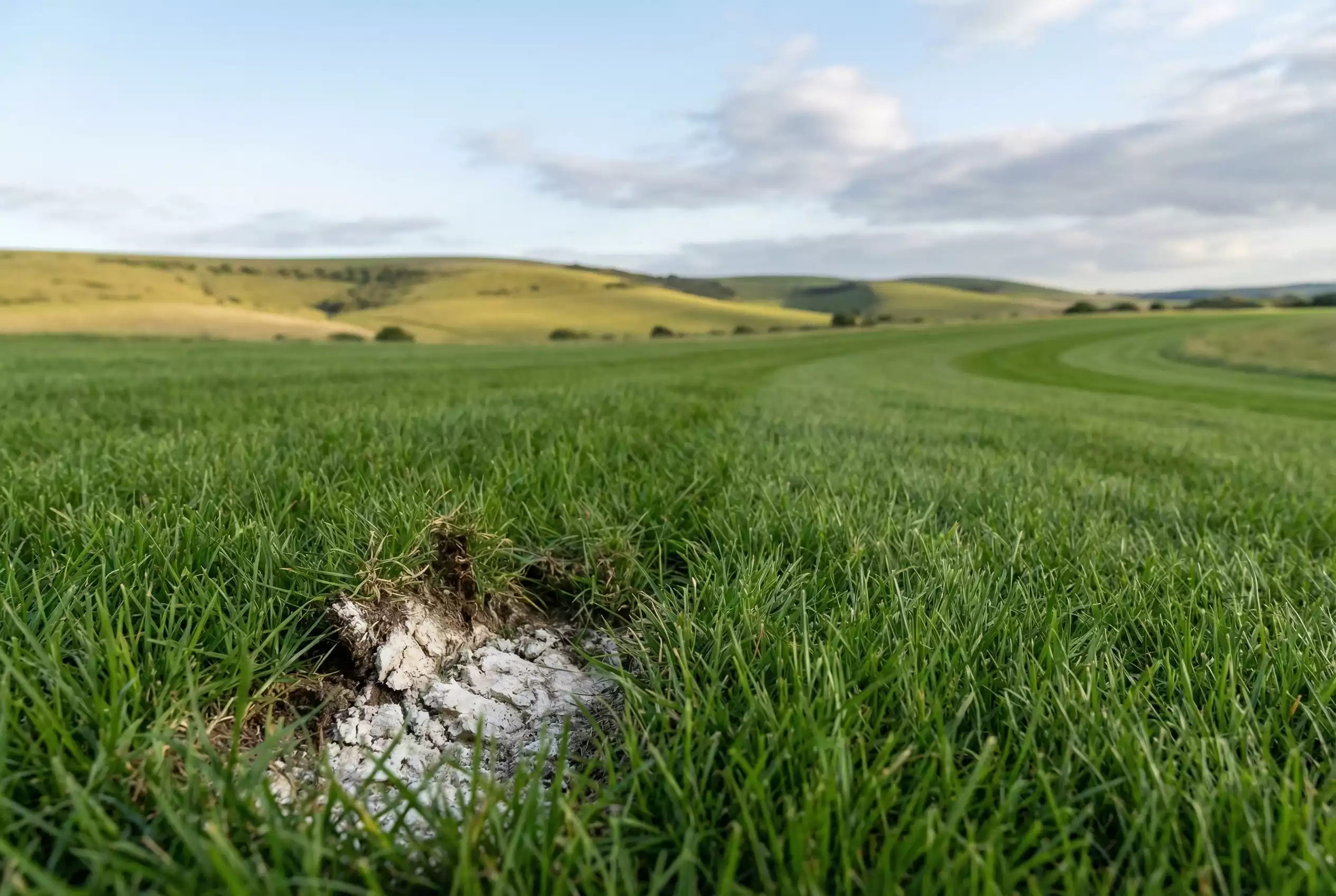
Goodwood sits on the chalk downland of the Sussex Downs, and that geological foundation creates a turf profile unlike any other major flat racecourse in Britain. The chalk subsoil drains rapidly, which means the ground dries out faster than at courses built on clay or loam. A Thursday evening shower that would leave Haydock or Pontefract riding soft barely registers at Goodwood. Conversely, a prolonged dry spell in July can firm the ground to a degree that punishes horses with a preference for give underfoot. The ground beneath the hooves shapes every result, and understanding how it does so gives you an edge that most punters lack.
This article walks through the going from first principles. We start with the BHA’s official going scale and what each description actually means for a horse’s action. Then we examine Goodwood’s specific turf profile and why its chalk base makes it a fast-draining, predominantly firm-ground track. From there, we look at how going conditions interact with draw bias, a relationship that is critical at sprint distances and widely overlooked. We cover how to adjust your form reading when the ground changes, how to interpret GoingStick readings, what race-day adjustments to watch for, and what the historical going data from Glorious Goodwood tells us about what to expect in a typical late-July meeting.
The BHA Going Scale: From Hard to Heavy
The British Horseracing Authority classifies going on a seven-point scale: hard, firm, good to firm, good, good to soft, soft, and heavy. Each point on the scale describes the resistance the ground offers to a horse’s hoof as it strikes the surface. At the firm end, the ground gives back energy efficiently, like running on a well-maintained athletics track. At the heavy end, each stride sinks into yielding turf, sapping energy and slowing the pace dramatically.
Hard ground is rare in Britain and generally undesirable. The surface offers minimal cushion, increasing the concussive force on joints and legs. Many trainers withdraw horses from meetings when the ground is officially hard, preferring to protect their animals rather than risk injury. When hard ground does occur at Goodwood, it tends to be during exceptional heatwaves in mid-summer, and the card may see significant non-runners.
Firm and good to firm are the standard summer descriptions and the conditions most commonly encountered at Goodwood during the festival period. On firm ground, the turf is dry, the surface is fast, and race times are quick. Good to firm adds a touch of moisture, which provides slightly more cushion without slowing the pace appreciably. This is the sweet spot for the majority of flat racehorses, and it is the condition Goodwood’s groundstaff aim for during the festival.
Good ground sits in the middle of the scale and represents a perfectly balanced surface: not too fast, not too slow, with enough give to be comfortable for most horses. Good to soft indicates that recent rainfall has introduced noticeable give, and the ground will be slower than the summer norm. Horses with a soft-ground pedigree, typically those with stamina in their breeding, tend to improve as the ground eases.
Soft and heavy are the extreme end, usually encountered during autumn and winter national hunt meetings. At Goodwood, soft ground during the festival is unusual but not impossible: a persistent weather front in late July can transform the track within 24 hours. When it happens, it reshuffles the entire form picture because horses that thrive on fast ground suddenly face conditions they dislike, and vice versa.
Each step on the scale changes the tactical equation. On firm ground, front-runners benefit because the surface returns energy efficiently and early speed is rewarded. On soft ground, hold-up horses with stamina reserves gain an advantage because the front-runners tire more quickly in the testing conditions. This interaction between going and running style is one of the fundamental dynamics of race analysis, and at Goodwood it plays out against the additional complexity of the track’s camber and draw biases.
Goodwood’s Chalk Turf: A Course Unlike Others
The defining feature of Goodwood’s turf is what lies beneath it. The course is built on chalk downland, a geological formation that acts as a natural drainage system. Chalk is porous. Rainwater percolates through it rapidly, far faster than through the clay subsoils that underpin many other British racecourses. The practical consequence is that Goodwood dries out quickly after rain, and the default condition during the summer months is good to firm or firmer.
Seamus Buckley, the clerk of the course, has described the ideal surface for flat racing at Goodwood: “The perfect Flat racing conditions are good to firm with a little moisture and a grass length of around four inches” (Racing Post). That description is precise for a reason. A grass length of four inches provides cushion without slowing the surface. A touch of moisture in the upper layer keeps the turf from becoming jar-hard, protecting the horses’ legs while maintaining the fast ground that flat racing demands. The groundstaff water the track to maintain this balance, and the chalk base means they can add moisture with confidence that it will drain away rather than pooling.
The five-furlong course at Goodwood is one of the fastest in the country (At The Races). That speed is a function of the chalk-based turf, the downhill start, and the compact distance. Horses covering five furlongs on this surface achieve velocities that would be impossible on a slower, clay-based track. The ground enables the speed, and the speed shapes the draw bias: faster races compress the field more quickly, giving less time for wide-drawn horses to find positions.
The chalk also creates a particular vulnerability. In a prolonged dry spell, the top layer of turf can become genuinely hard, even when the groundstaff water daily. The chalk beneath drains so efficiently that the moisture does not linger in the root zone. When this happens, the going can officially read good to firm while the actual running surface is firmer than that description suggests. Experienced punters check not just the going description but also the GoingStick readings, which provide a numerical measure of ground penetration and shear, to assess whether the official description matches the reality underfoot.
How Going Conditions Alter Draw Bias
The relationship between going conditions and draw bias at Goodwood is one of the most underappreciated dynamics in British flat racing. On firm ground, the draw bias at sprint distances is at its strongest. On soft ground, it weakens. The mechanism is physical, not statistical, which means it is reliable rather than coincidental.
When the ground is firm, the inside rail offers the fastest racing surface. The turf along the rail, protected by the running rail itself from the worst wear, retains its structure and provides consistent footing. Horses drawn low take this strip and benefit from a surface that returns energy efficiently on every stride. Horses drawn high run on turf that is marginally less pristine, and on a surface that does not drain quite as evenly across its width. The firm ground amplifies the advantage of being on the rail because the difference between the rail strip and the wider ground is maximised.
When rain softens the ground, the inside rail changes character. The strip closest to the rail, which has been raced on most frequently, becomes the most damaged and the most waterlogged. Horses running on the rail are now running on the slowest part of the track rather than the fastest. Jockeys recognise this and steer their mounts away from the rail, looking for fresher ground in the middle or even on the outside. The result is that the field fans out, the congestion on the bend decreases, and the draw bias diminishes because the positional advantage of being near the rail has inverted.
Geegeez’s PRB analysis of Goodwood races reflects this interaction. At seven furlongs on good to firm ground, the spread between low-draw PRB (0.54) and high-draw PRB (0.46) is clear (Geegeez). On softer ground, that spread narrows. The low-draw advantage compresses because the rail is no longer the premium path, and the high-draw disadvantage eases because the wider passage is no longer the inferior one.
For punters, this interaction creates a decision point on every Goodwood race day. If the ground is firm, apply the draw filters aggressively: favour low draws at sprint distances and penalise high draws. If the ground has eased, relax the filters. A horse drawn in stall 14 that you would dismiss on firm ground might become a reasonable proposition on soft ground, because the surface conditions have levelled the positional playing field. The going report is not just a footnote to your analysis. It is the calibration tool for your draw filter.
This is also why late-breaking rain at Goodwood can reshape the betting landscape. If the going changes from good to firm to good during the afternoon, perhaps after an unexpected shower, the draw biases calculated on the morning going no longer fully apply. Horses drawn wide in the later races may suddenly have a better chance than the market, which was set on the morning going, has priced in. Watching the weather and the going updates throughout the afternoon is not paranoia. It is information that the market is slow to absorb.
Adjusting Form for Different Ground
A horse’s form figures are recorded on a specific surface. A “1” on soft ground at Haydock tells you the horse won at Haydock on soft ground. It does not tell you the horse will run well on the firm ground at Goodwood in July. Ignoring the going on which form was achieved is one of the most common analytical errors in racing, and at Goodwood, where the ground is typically at the fast end of the scale, it is also one of the most costly.
Some horses act on any ground. These are the versatile performers whose action and stamina allow them to cope with firm and soft alike. They are the minority. Most flat horses have a preference, and that preference is detectable in their form record. A horse whose best performances cluster on good to firm or firm going is one that handles a fast surface. A horse whose wins come exclusively on soft or heavy is one that needs give in the ground to perform. Running the latter at Goodwood on a firm July afternoon is, in most cases, setting money on fire.
The adjustment works in both directions. If the Goodwood going is its typical good to firm, discount form achieved on soft or heavy ground unless the horse has also shown it can act on a faster surface. If an unusual weather pattern has softened the Goodwood ground to good or softer, discount form achieved exclusively on firm going. The horse that powered to victory on rattling-fast ground at Newmarket may struggle when asked to plough through yielding turf for the first time.
Breeding offers a secondary indicator. Sires whose progeny consistently perform well on firm ground pass on biomechanical traits, a quick, daisy-cutting action, light feet, efficient energy return, that suit a fast surface. Sires whose offspring prefer soft ground tend to produce horses with a higher knee action that digs into yielding turf rather than skimming across it. When a horse is running at Goodwood for the first time and has limited form on the expected going, its sire’s ground preference can serve as a proxy. It is not definitive, but it is better than guessing.
The practical step is to add a going column to your racecard analysis. For each runner, note the going on which its last three runs were achieved. If those runs were on a surface that matches the current Goodwood going, the form is directly applicable. If they were on a different surface, apply a discount, the size of which depends on how extreme the difference is. A run on good ground translating to good to firm at Goodwood is a minor adjustment. A run on heavy ground translating to firm at Goodwood is a major red flag.
GoingStick Readings: Numbers Behind the Description
The GoingStick is a device that measures the firmness and moisture content of the turf by driving a probe into the ground and recording the resistance it encounters. The output is a pair of numbers: penetration (how far the probe sinks) and shear (how much force is needed to move the probe laterally once inserted). The combined reading produces a single figure on a scale that ranges roughly from 2 (very soft) to 15 (very firm), though extreme values are rare.
The BHA uses GoingStick readings alongside the clerk of the course’s visual and physical inspection to determine the official going description. The approximate thresholds are: above 10.0 indicates firm, 8.0 to 10.0 indicates good to firm, 6.5 to 8.0 indicates good, 5.0 to 6.5 indicates good to soft, and below 5.0 indicates soft or heavy. These thresholds are guidelines rather than rigid cut-offs, and the clerk can adjust the official description based on local knowledge and the distribution of readings across different parts of the track.
For punters, the GoingStick reading adds precision to the blunt official description. “Good to firm” covers a wide band of ground conditions: the firm side of good to firm (GoingStick 9.5) is a noticeably faster surface than the easy side (GoingStick 8.0). Horses with a strong firm-ground preference will perform better on the former than the latter, even though both carry the same official label. Checking the actual GoingStick number, which is published on the course’s social media channels and on the BHA’s race-day information feeds, gives you a finer-grained picture.
GoingStick readings are taken at multiple points around the course, and the published figure is usually an average. At Goodwood, the chalk base means that readings tend to be more uniform across the track than at courses with variable subsoils, but there can still be differences between the straight course and the round course, or between sheltered sections and exposed areas. If the average reading is on the cusp of a threshold, the going may favour different types of horse on different parts of the track. This is worth noting for a five-day festival, where the turf condition evolves from Tuesday to Saturday.
Race-Day Adjustments: From Declaration to Post Time
The going description published on the morning of a race day is not necessarily the going description that applies when the first race goes off, let alone the last. Between the time entries are confirmed and the moment the stalls open, the ground can change. Understanding what causes those changes and how to detect them is part of an informed betting approach at Goodwood.
Watering is the most common cause of race-day going changes. Goodwood’s groundstaff water the track to maintain the target surface, and they may irrigate overnight or in the early morning before racing. If the weather has been dry and the ground is trending towards firm, the watering will add moisture and ease the going towards good to firm. The watering schedule is typically announced via the racecourse’s official communications, and checking it is a two-minute task that can alter your assessment of how the draw and pace dynamics will play out.
Overnight rain is the other major variable. A summer shower at Goodwood, thanks to the chalk base, drains quickly and may not change the going at all. A sustained period of rainfall, three or four hours of steady rain, can soften the ground by a full step on the scale. If you placed your bets the previous evening based on a good-to-firm forecast and the overnight rain has eased the ground to good, your selections may no longer be suited to the conditions. This is one of the strongest arguments for betting on the day of the race rather than the evening before: the going information is more current and more accurate.
Time of day matters too. The going can change during the meeting itself. On a hot afternoon, the ground firms up between races as the sun evaporates surface moisture. On a day with intermittent showers, the going might ease in the middle of the card and then dry out again by the final race. Horses in the last two races of the day may face a different surface from those in the first two, and the market does not always adjust quickly enough to reflect this. Watching the jockeys’ comments after each race, which are often relayed on the broadcast, can give you real-time intelligence about whether the ground is changing.
The rail position can also change during the day. If the groundstaff observe that the inside rail is cutting up after the early races, they may move the running rail to present fresh ground. This change affects both the going on the racing line and the draw bias, and it is typically announced between races. If you are at the course, a quick check of the announcements board or the racecourse app will keep you informed. If you are betting remotely, the information flows through social media channels and live commentary.
Historical Going Patterns at Glorious Goodwood
The Qatar Goodwood Festival takes place in late July or early August, which is statistically the driest and warmest period of the British summer. That timing, combined with the chalk base, means the default going at the festival is good to firm. Over the last five years, the majority of festival days have been staged on ground described as good to firm, with occasional days reading simply good after overnight watering or light rain.
Genuinely soft ground at Glorious Goodwood is unusual but not unprecedented. When it occurs, it tends to follow a multi-day weather event, a sustained period of rain that overwhelms even the chalk’s drainage capacity. These occasions disrupt the form picture significantly. Horses with proven good-to-firm form suddenly face conditions they have never encountered, while horses with soft-ground pedigrees become live contenders in races where the market had dismissed them. Punters who check the forecast a week before the festival and adjust their ante-post positions accordingly can capture value that evaporates once the market fully prices in the ground change.
The number of horses in training in Britain has declined in recent years, falling to 21,728 in 2025, a drop of 2.3 per cent from the previous year (BHA 2025 Racing Report). Fewer horses means smaller and potentially less competitive fields at some festivals, which in turn means that the going has a proportionally larger impact on each individual race. In a full field of 20 runners, the going is one variable among many. In a field of 10, where two or three non-runners have been withdrawn because the ground does not suit them, the going becomes a dominant factor in the result.
The five-year historical pattern also reveals a within-festival trend. The going on Tuesday, the opening day, is typically at its best: the turf is fresh, the groundstaff have had days to prepare it, and the surface is uniform across the track. By Saturday, after four days of racing, the ground on the inside rail has been used repeatedly and may have deteriorated, particularly in the areas around the bends where the field concentrates. This progressive wear means that the draw bias documented on Tuesday may not apply identically on Saturday. The later in the week you are betting, the more important it is to check the going updates and the rail position, because the track surface has evolved since the start of the festival.
For ante-post betting, the historical going pattern suggests a simple default: prepare for good to firm, but have a contingency shortlist of horses that would be upgraded if the ground softens. If you have backed a horse ante-post that needs fast ground and the forecast shows rain arriving mid-week, you have a decision to make about hedging. If you have left your bets until race day, the going is a known quantity and you can act on it directly. Both approaches have merit. What does not have merit is ignoring the going entirely and hoping for the best. The ground beneath the hooves shapes every result, and at Goodwood that truth is carved in chalk.