
- Twenty-Eight Runners, One Systematic Edge
- Race Profile: Heritage, Distance, Field Size
- 10-Year Winners: Patterns in the Chaos
- Weight Filter: Why Lightweights Dominate
- Fitness and Recency: The 46-Day Rule
- Draw Dynamics in a 28-Runner Sprint
- Building an Outsider Shortlist
- Recent Renewals: Stories That Illustrate the Trends
Twenty-Eight Runners, One Systematic Edge
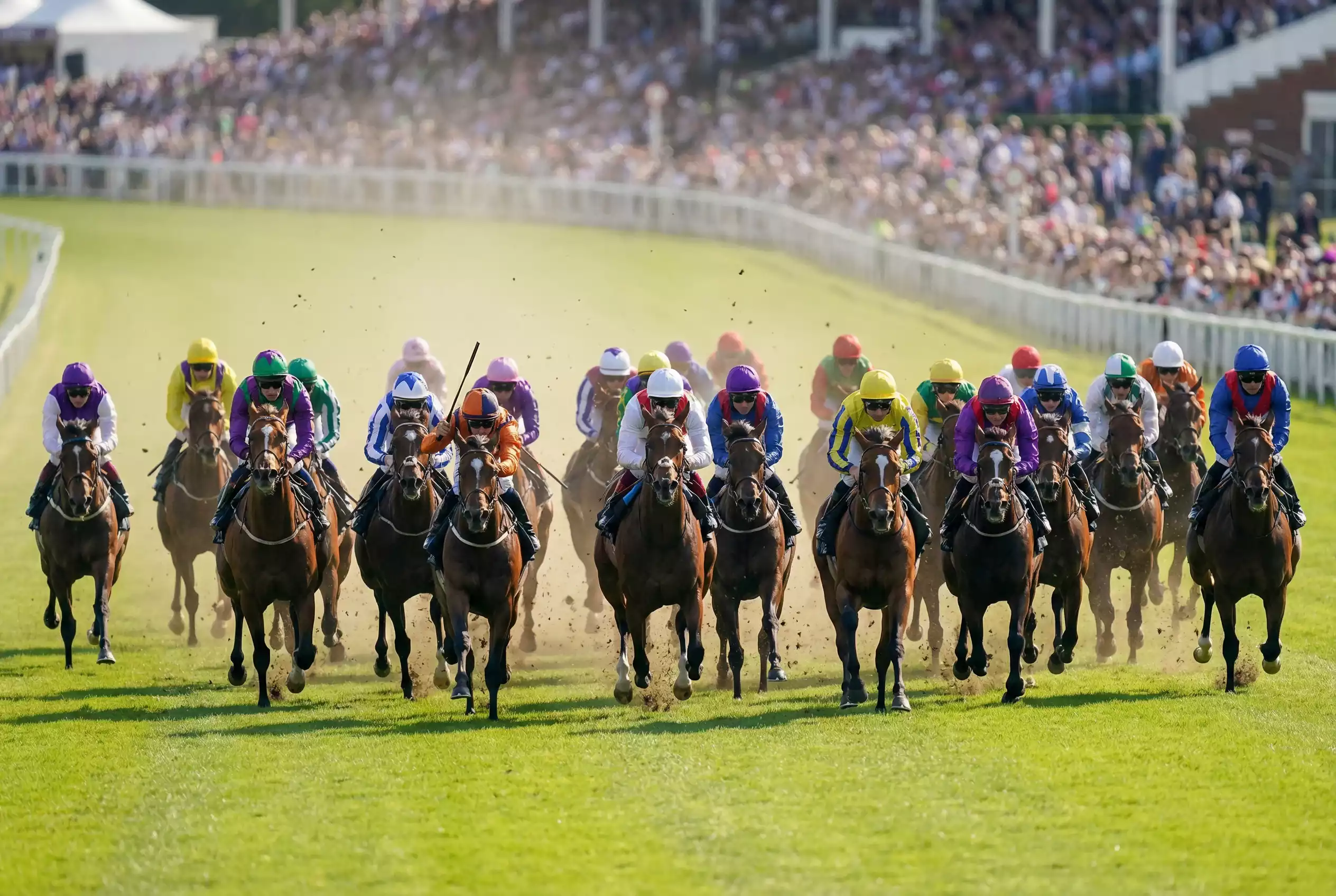
Stewards’ Cup betting looks, at first glance, like a lottery. Twenty-eight runners crammed into stalls on Goodwood’s six-furlong course, a sprint handicap with a quarter of a million pounds in prize money, and a results history that includes winners at 40/1 and 50/1. The temptation is to throw a dart, pick a lucky number, and hope. That temptation should be resisted, because underneath the apparent chaos there are patterns sharp enough to cut your shortlist from 28 runners to single figures.
This is the Saturday centrepiece of Glorious Goodwood, a race that draws more casual betting interest than almost any other handicap on the flat calendar. The field size alone guarantees excitement, and the sprint distance ensures that errors of position or judgement are punished immediately and permanently. There is no time to recover from a slow start or a wide passage. Everything that matters happens in roughly 70 seconds.
Richard Wayman, the BHA’s Director of Racing, has acknowledged that “the horse population continues to decline and the betting environment remains challenging” (Racing Post). In that environment, where turnover is falling and margins are thinner, the punters who survive are the ones who apply filters rather than feelings. The Stewards’ Cup is a race that rewards exactly that discipline. The trends we are about to walk through are not foolproof, no trend in racing ever is, but they are consistent enough over a decade of data to give you a structural advantage over anyone who approaches this race without a system.
What follows is a filter-by-filter breakdown: weight, fitness, draw, price history, and recent form. Each filter eliminates runners. Applied together, they leave you with a manageable shortlist of four to six horses, any of which could win, and all of which satisfy the conditions that the last ten years of Stewards’ Cup winners have shared.
Race Profile: Heritage, Distance, Field Size
The Stewards’ Cup is a six-furlong sprint handicap run on the final Saturday of the Qatar Goodwood Festival. It carries a prize fund of £250,000 and accepts a maximum field of 28 runners, making it one of the largest and most competitive flat handicaps of the British summer. The race has been a fixture at Goodwood since the mid-19th century, and its position on the Saturday card ensures that it attracts a massive betting audience, both on-course and online.
Heritage handicaps occupy a specific niche in the racing calendar. They are not Group races: the field is defined by the handicapper’s assessment rather than by pure ability. The best horse in the race, on raw ratings, might carry 10 stone. The lowest-weighted runner might carry 8 stone 5 pounds. That weight spread is designed to level the playing field, and in theory it does, which is why these races are so competitive and so difficult to solve.
The six-furlong distance at Goodwood adds a layer that most other heritage handicaps do not share. The course’s right-handed camber, the downhill start, and the compressed bend mean that positional factors carry more weight here than in equivalent races at, say, York or Ascot. A heritage handicap at Newmarket, run on a straight course, neutralises the draw. The Stewards’ Cup emphatically does not. At Goodwood, a horse’s stall number is part of its profile, not just a detail on the racecard.
The race traditionally closes out the festival week, and by Saturday the Goodwood turf has endured four days of racing. The going can change significantly between Tuesday and Saturday, particularly if the weather shifts mid-week. A horse whose ideal conditions are good to firm may find itself running on ground that has eased to good or softer, and that shift can alter the draw dynamics, the pace scenario, and the outcome. Checking the Saturday morning going report is not optional for this race. It is essential.
10-Year Winners: Patterns in the Chaos
Line up the last ten Stewards’ Cup winners and something emerges from the noise. Only three of those ten were market favourites. Five of the ten won at odds of 20/1 or longer (NewBettingSites.UK). That split tells you two things immediately. First, the favourite is a poor bet in this race: a 30 per cent strike rate sounds reasonable for a favourite in a small field, but when 28 runners are involved, the favourite is routinely overbet relative to its true probability. Second, the race is structurally biased towards outsiders, which means the value, if you can isolate the right outsider, is substantial.
The outsider bias is not random. It reflects the handicap structure. In a 28-runner sprint, the handicapper has spread the weights across a wide range, and several lightly weighted horses will have legitimate claims that the market underestimates. The favourite tends to be the highest-rated horse or the one with the most obvious recent form, and while that horse will run well more often than not, converting good form into a win in a 28-runner cavalry charge on Goodwood’s camber is a different proposition entirely. The favourite gets blocked, gets pushed wide, gets caught in traffic, and suddenly a 5/2 shot is finishing fourth while a 25/1 outsider is sliding up the inside rail.
A second pattern: the winners tend to come from a narrow band of the handicap. They are not the top weights, burdened by high ratings and big lumps of lead. They are not the bottom weights either, whose low ratings often reflect limited ability rather than hidden potential. The sweet spot sits in the middle-to-lower third of the weight range, horses rated well enough to compete but not so well known that the market has priced them accurately. This is where the weight filter, discussed in the next section, becomes decisive.
A third trend worth flagging: recent Stewards’ Cup winners tend to have shown progressive form in their most recent starts. Horses that were running below their rating two or three runs ago and have since improved are overrepresented among the winners, suggesting that the handicapper has not yet caught up with their current ability. This is the classic each-way punting angle: find a horse on the upgrade whose handicap mark lags behind its true form, and back it before the market catches on.
Weight Filter: Why Lightweights Dominate
Of the last 12 Stewards’ Cup winners, 11 carried 9 stone 6 pounds or less (TheStatsDontLie). That is not a mild trend. That is a structural feature of this race, and it demands explanation.
The physics are straightforward. A six-furlong sprint at Goodwood, with its downhill start and right-handed camber, rewards acceleration and agility over raw stamina. A horse carrying 8 stone 10 pounds accelerates faster out of the stalls and handles the camber more nimbly than a horse carrying 9 stone 12 pounds. Over six furlongs, where the margins are measured in fractions of a second, that weight difference translates into a tangible advantage. The lighter horse does not need to be better. It just needs to be close enough in ability that the weight concession closes the gap.
There is also a psychological factor in the market. Punters are drawn to top-weighted horses because they are usually the highest-rated, and high ratings imply quality. The assumption is that the best horse will win, regardless of the weight it carries. In Group races, where every runner carries a similar weight, that assumption is reasonable. In a heritage handicap, it is not. The handicapper has deliberately penalised the best horse with extra weight, and the 28-runner field guarantees that the top weight will face traffic problems, positional disadvantages, and the sheer statistical improbability of navigating cleanly through a congested sprint.
The practical application of this filter is binary. If a horse is allocated more than 9 stone 6 pounds in the Stewards’ Cup, its historical probability of winning drops sharply. That does not mean you should never back a top weight, a genuinely well-handicapped horse can occasionally overcome the burden, but it does mean that your default shortlist should be built from the lighter end of the weight range. Start with every runner carrying 9 stone 6 pounds or less. That alone will typically reduce the field from 28 to 15 or 16 candidates, which is already a significant narrowing.
One caveat: the weight filter works best in conjunction with the other filters. A lightweight horse that has not run for three months and draws stall 27 ticks the weight box but fails on fitness and draw. The filter is a sieve, not a selector. It removes the unlikely winners. It does not identify the likely one. That job requires stacking all the filters together.
Fitness and Recency: The 46-Day Rule
Every single one of the last ten Stewards’ Cup winners, from 2015 through 2024, ran their previous race within 46 days of the Stewards’ Cup itself (NewBettingSites.UK). Not nine out of ten. Not eight. All ten. In a sport where exceptions are the norm, a perfect record across a decade is remarkable, and it gives you one of the cleanest elimination filters available for this race.
The logic behind the 46-day rule is tied to the demands of the race itself. A six-furlong sprint at Goodwood in late July or early August, with 28 runners, a sharp camber, and a pace that is invariably fierce from the break, requires a horse to be at peak match fitness. It is not a race where a horse can amble along for four furlongs and then accelerate. The entire field is flat out from the gates, and any horse that is even slightly short of fitness will be exposed within the first two furlongs.
A gap of more than 46 days between a horse’s last run and the Stewards’ Cup suggests one of two things. Either the horse has had a setback, in which case it is unlikely to be at peak fitness, or the trainer has deliberately kept it fresh for this race, in which case it might be fit enough but will lack the competitive sharpness that comes from recent racing. The data says both scenarios produce losers. The winners have all been recently active, battle-hardened by a run in the preceding six weeks.
Applying this filter is simple. Check the date of each runner’s last start. If that date is more than 46 days before the Stewards’ Cup, eliminate the horse from your shortlist. This filter typically removes five to eight runners from the field, bringing it down from whatever the weight filter left you to a more manageable number. Combined, weight plus recency can reduce a 28-horse field to 10 or 12 candidates, which is already a far more workable set than the raw entry.
There will come a year when a horse breaks the 46-day streak. Trends in racing are probabilities, not laws. But until that happens, betting against a decade of evidence requires a compelling reason, and “it looked good on the gallops” does not qualify. If the horse has not raced recently, move on to one that has.
Draw Dynamics in a 28-Runner Sprint
The draw in the Stewards’ Cup operates under the same physical principles as any six-furlong race at Goodwood, but the scale of the field amplifies every positional factor. When 28 horses break from the stalls and charge towards a right-handed bend, the congestion on that bend is intense. Horses on the inside have the rail. Horses in the middle have traffic. Horses on the outside have open space but extra ground to cover. None of these positions is ideal, but some are considerably worse than others.
The general rule at six furlongs, that low stalls save ground and high stalls spend it, holds in the Stewards’ Cup with one important modification: the field is so large that the stalls extend far wider than in a typical 14 or 16-runner race. A horse drawn in stall 24 is not just slightly wide of the rail. It is starting from a position that adds measurable metres to its journey around the bend. The camber pushes it further out, and the wall of horses between it and the rail makes it almost impossible to cross to the inside before the home straight.
That said, very low draws are not always the answer either. Stall 1 in a 28-runner field positions the horse right on the inside rail, which sounds ideal until you consider the crush. With 27 horses to its outside, the stall 1 runner can get squeezed against the rail on the bend, boxed in by faster-starting rivals, and unable to get a clear run until too late. The sweet spot in the Stewards’ Cup draw tends to be stalls 3 through 10: close enough to the rail to save ground, but with enough room to manoeuvre through the bend without being trapped.
The draw filter for this race is therefore slightly more nuanced than for a standard six-furlong handicap. Rather than a simple “low is good, high is bad” rule, treat it as a gradient with a caution zone at the very bottom and a danger zone from stall 15 upward. Horses drawn between 3 and 12 have the most flexible set of tactical options. Beyond stall 15, the horse needs either a blistering break speed to cross to the rail or the willingness to accept a wide trip and hope the pace is strong enough to set it up for a late charge.
One further consideration: the going on Saturday can shift the draw dynamics. If the ground is fresh and the inside rail is in good condition, low draws are strongest. If four days of racing have chewed up the inside strip, horses drawn wider may find better footing on the outside, partially offsetting the ground they lose. Check the state of the rail before committing to a draw-based filter on race day.
Building an Outsider Shortlist
The point of every filter discussed above is to reach this moment: staring at a list of four to six horses rather than 28. The process works by elimination, and the order matters. Start with weight, then apply recency, then draw, and finally cross-reference with recent form. Each layer peels away runners who fail a condition that every recent winner has satisfied. What remains is not a guaranteed winner. It is a set of plausible winners, priced generously by a market that has not applied the same filters.
Here is the sequence in practice. Take the full 28-runner field. Remove every horse carrying more than 9 stone 6 pounds. That leaves roughly 15 to 18 runners. Remove every horse whose last run was more than 46 days ago. That leaves 10 to 13. Remove every horse drawn above stall 14, unless its early speed profile suggests it can cross to the rail quickly. That leaves 7 to 10. Now apply a basic form check: has the horse shown progressive or consistent form in its last two or three runs? Has it run well over six furlongs at a similar level? Eliminate those that have not. You should be left with four to six runners.
Within that shortlist, the value calculation takes over. Check the current odds. If your shortlisted horses are priced between 10/1 and 33/1, the market is not pricing in the trend advantage they possess, and the each-way value is strong. If one of your shortlisted horses is the 4/1 favourite, the trend advantage is already priced in and the value evaporates. The Stewards’ Cup is an outsider’s race by nature: five of the last ten winners were 20/1 or longer. Your shortlisting method is designed to identify which outsiders have substance behind the price.
A word on staking. In a race this volatile, spreading your stake across two or three selections each way is a more resilient strategy than loading up on a single pick. If your shortlist contains four horses, backing the two longest-priced each way gives you exposure to the outsider angle while limiting your downside. The goal is not to find the winner every year. It is to find the winner often enough, at prices long enough, that the cumulative returns outweigh the cumulative losses. Over five or ten renewals, this systematic approach should outperform any strategy based on gut feeling, tipster recommendation, or lucky colours.
Finally, be willing to have no bet. If the filters leave you with a shortlist of horses all priced below 8/1, the trends say this is not your year to engage aggressively. A small each-way saver on the longest-priced qualifier is fine. A heavy investment on a short-priced runner in a 28-horse sprint is not. The discipline of walking away when the numbers do not stack up is, in the long run, worth more than any single winner.
Recent Renewals: Stories That Illustrate the Trends
Data is convincing. Stories make it memorable. The recent history of the Stewards’ Cup is full of renewals that validate the filters, and two stand out as case studies in what to look for and what to learn.
In 2024, Get It won the Stewards’ Cup at 40/1 and broke the course record in the process (NewBettingSites.UK). That price tag screams longshot fluke, and most punters would have dismissed it as such. But run the horse through the filters and the picture changes. Get It carried a light weight, well under the 9 stone 6 pound threshold. The horse had raced within the 46-day window, arriving at Goodwood in sharp competitive condition. Its draw was favourable, sitting in the lower half of the stalls. And its recent form showed improvement, a horse running into the kind of form that suggested the handicapper had not yet caught up. Every filter was green. The price was a reflection of the market’s inability to see past the raw number of rivals, not a reflection of the horse’s chances.
The course record added an extra dimension. A record time in a six-furlong sprint on Goodwood’s undulating track indicates not just speed but efficiency: the winner navigated the camber, the field congestion, and the downhill-to-uphill transition better than 27 rivals. It was a vindication of the trend-based approach, because the horse that the filters would have highlighted was the same horse that produced a historic performance.
Two years earlier, in 2022, Commanche Falls became the first horse to win the Stewards’ Cup twice in more than half a century (BettingSites.co). The repeat victory was significant because it demonstrated that the Stewards’ Cup is not purely random. A horse with the right profile, light weight, recent fitness, a suitable draw, and the speed to exploit Goodwood’s camber, can win this race more than once. Randomness does not repeat. Suitability does.
Commanche Falls ticked the same boxes both years: competitive weight, sharp recent form, a workable draw, and the raw gate speed to get into position before the bend. The market gave longer odds in the second year precisely because punters assumed lightning does not strike twice in a 28-runner handicap. It does, when the underlying conditions are the same. The repeat win is the strongest possible argument for trend-based selection in this race. The profile did not change. The result did not change either.
These stories are not meant to suggest that every trend-qualified runner will win. Most will not. What they demonstrate is that the winners are not random selections from a 28-strong field. They share characteristics, and those characteristics are identifiable in advance. That is the entire premise of the filtering approach: not to predict the winner, but to identify the pool from which the winner is most likely to emerge.